
01
Progressive Stiffness
Increasing difficulty moving the shoulder through normal daily movement patterns.
Frozen shoulder can gradually make simple activities feel surprisingly difficult. Tasks such as reaching a shelf, putting on a shirt, fastening a seat belt, lifting lightweight objects, or sleeping comfortably may become increasingly challenging as shoulder movement becomes restricted. Many individuals initially notice mild stiffness before realizing that their ability to move the shoulder is steadily decreasing.
Physiotherapy for frozen shoulder focuses on restoring shoulder mobility, improving movement quality, and supporting recovery through structured rehabilitation. Rather than encouraging complete rest, modern rehabilitation programs emphasize safe movement strategies that help individuals regain confidence while working toward improved flexibility, function, and physical independence.
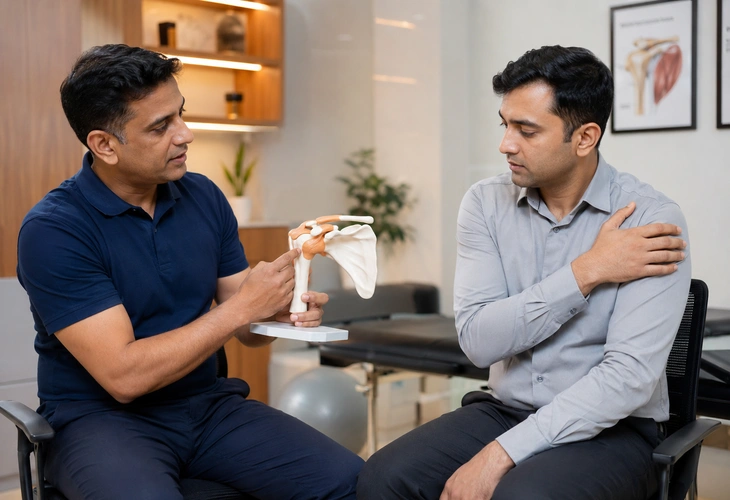
Frozen shoulder symptoms often develop gradually and may affect shoulder movement long before daily activities become significantly limited.
Increasing difficulty moving the shoulder through normal daily movement patterns.
Discomfort while reaching overhead, lifting, dressing, or performing routine tasks.
Limited shoulder mobility that affects functional movement and physical activities.
Symptoms may become more noticeable during the night or while lying on the affected side.

Frozen shoulder, also known as adhesive capsulitis, is a condition that affects the shoulder joint and surrounding capsule. Over time, movement becomes increasingly restricted, making it difficult to perform activities that once felt effortless. Unlike temporary muscle soreness, frozen shoulder can affect multiple directions of shoulder movement and may significantly influence everyday function.
The shoulder is one of the most mobile joints in the body. This mobility allows individuals to reach, lift, carry, push, pull, throw, and perform countless daily activities. When shoulder mobility becomes restricted, even simple tasks may require additional effort or compensation from other parts of the body.
Many people seek frozen shoulder treatment because they notice progressive stiffness rather than a single injury event. Symptoms often develop gradually and may continue changing over an extended period. The condition can affect work responsibilities, exercise participation, recreational activities, driving, and general quality of life.
Physiotherapy assessments focus on understanding movement limitations, functional challenges, flexibility restrictions, and rehabilitation goals. These findings help guide personalized recovery strategies designed to support mobility restoration and long-term shoulder function.
Frozen shoulder is commonly described as progressing through several phases, although every individual's experience may differ.
Shoulder discomfort gradually increases while movement may begin becoming more restricted during daily activities.
Shoulder mobility becomes increasingly limited and functional activities may feel significantly more challenging.
Gradual improvements in movement and function may occur as rehabilitation progresses and mobility begins returning.
The exact cause is not always clear. However, several factors may influence the development of shoulder stiffness and movement restrictions.
Long periods of limited shoulder activity following injury, discomfort, or inactivity may contribute to progressive stiffness.
Some individuals notice symptoms developing after earlier shoulder conditions that affected normal movement patterns.
Reduced movement during recovery periods may influence shoulder flexibility and joint mobility.
Avoiding shoulder movement because of discomfort may gradually contribute to increasing stiffness over time.
Using alternative movement patterns may place additional stress on surrounding muscles and joints.
Persistent reductions in shoulder range of motion may influence everyday function and activity participation.
Physiotherapy for frozen shoulder focuses on improving movement quality, restoring shoulder mobility, enhancing flexibility, and helping individuals gradually return to daily activities. Rehabilitation programs are designed according to the individual's symptoms, movement restrictions, activity requirements, and recovery goals.
Rather than focusing solely on discomfort, rehabilitation aims to understand how shoulder movement limitations affect physical function. Treatment plans often include mobility exercises, flexibility training, movement education, posture awareness, and progressive activity guidance.
Recovery timelines vary between individuals. Structured rehabilitation helps support gradual improvements while encouraging safe and meaningful movement throughout the recovery process.

Evaluating shoulder movement restrictions and identifying limitations affecting daily activities.
Structured exercises designed to encourage gradual improvements in shoulder mobility.
Addressing tightness around the shoulder and surrounding structures that may influence movement quality.
Rehabilitation strategies linked to practical activities performed during daily life.
Helping individuals understand how to stay active while supporting recovery goals.
Tracking improvements in mobility, function, and movement confidence throughout rehabilitation.
Supporting smoother and more comfortable shoulder movement during everyday tasks.
Helping individuals perform daily activities with greater confidence and efficiency.
Encouraging healthier movement patterns throughout work, exercise, and routine activities.
Supporting gradual improvements in shoulder range of motion and physical function.

Rehabilitation is often most effective when structured physiotherapy is combined with healthy daily movement habits. Small adjustments throughout the day may help support mobility goals and improve overall shoulder function.
Gentle and appropriate movement may help maintain mobility and reduce unnecessary stiffness.
Performing prescribed exercises consistently is often an important part of recovery.
Long periods of inactivity may contribute to increasing movement restrictions.
Recovery often involves balancing movement progression with individual comfort levels.
Frozen shoulder is a condition characterized by progressive shoulder stiffness and reduced mobility that may affect everyday activities and physical function.
Physiotherapy commonly focuses on mobility improvement, flexibility restoration, movement quality, and functional rehabilitation based on individual needs.
Recovery timelines vary considerably between individuals depending on symptoms, mobility restrictions, rehabilitation consistency, and other factors.
Exercise programs are commonly used within rehabilitation plans to support mobility, flexibility, and movement restoration.
Some individuals notice symptoms becoming more noticeable at night or while lying on the affected shoulder.
Frozen shoulder specifically involves progressive mobility restriction, whereas shoulder pain can occur for many different reasons.
Every recovery journey is different. A structured rehabilitation process focuses on understanding movement limitations, restoring mobility, improving shoulder function, and helping individuals return to daily activities with greater confidence.
Identify restrictions affecting daily activities.
Create a personalized rehabilitation strategy.
Improve flexibility and shoulder movement quality.
Return to work, exercise, and daily activities.