
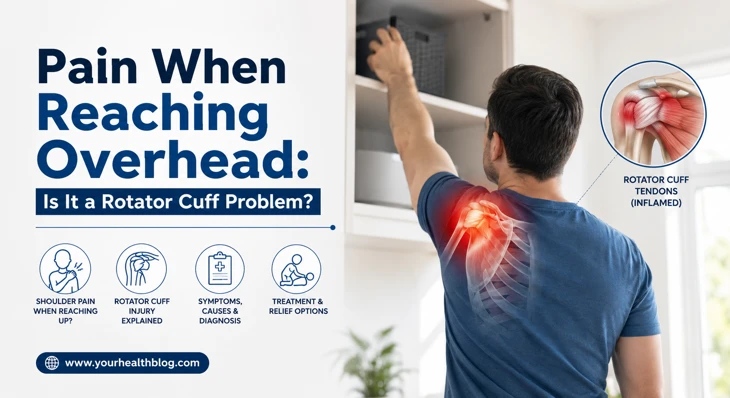
- Quick Answer: Can a Rotator Cuff Problem Cause Pain When Reaching Overhead?
- Understanding the Rotator Cuff and Its Role
- Why Does My Shoulder Hurt When I Reach Up?
- Common Activities That Trigger Overhead Shoulder Pain
- Symptoms That Suggest a Rotator Cuff Problem
- How Doctors Diagnose the Cause of Overhead Shoulder Pain
- When Shoulder Pain Is Not a Rotator Cuff Problem
- What Can You Do at Home?
- Exercises for Shoulder Pain When Lifting the Arm
- Mistakes That Can Make Shoulder Pain Worse
- When to See a Doctor for Shoulder Pain When Reaching Overhead
- Can Rotator Cuff Problems Heal Without Surgery?
- Key Takeaways for Overhead Shoulder Pain
Reaching up to grab a plate from a cabinet, putting luggage into an overhead compartment, hanging clothes, or simply stretching your arm above your head should be effortless. But if these everyday movements cause shoulder pain, you may wonder whether something is wrong with your rotator cuff. The answer is often yes—but not always. Pain when reaching overhead is one of the most common symptoms of shoulder dysfunction. While a rotator cuff injury is a common cause, other conditions, such as shoulder impingement, frozen shoulder, bursitis, arthritis, or muscle strain, can also cause similar symptoms. Understanding why your shoulder hurts when you reach up can help you identify the underlying problem and determine when professional treatment is necessary.
Quick Answer: Can a Rotator Cuff Problem Cause Pain When Reaching Overhead?
Yes. The rotator cuff is a group of four muscles and tendons that stabilize the shoulder joint and help lift and rotate the arm. When these tendons become irritated, inflamed, or torn, overhead movements often become painful. Common signs include:
- Pain when raising the arm above shoulder level
- Shoulder weakness when lifting the arm overhead
- Sharp shoulder pain when reaching for something high
- Difficulty lifting the arm overhead due to shoulder pain
- Nighttime shoulder discomfort
- Reduced range of motion
However, other shoulder conditions can produce similar symptoms, so a proper evaluation is important.
Understanding the Rotator Cuff and Its Role
The rotator cuff consists of four muscles:
- Supraspinatus
- Infraspinatus
- Teres minor
- Subscapularis
Together, they help:
- Stabilize the shoulder joint
- Lift the arm
- Rotate the arm inward and outward
- Control movement during overhead activities
Because the shoulder has a large range of motion, these tendons experience significant stress during daily activities and sports. When the rotator cuff becomes irritated or damaged, even simple tasks can trigger pain.
Why Does My Shoulder Hurt When I Reach Up?
If you're asking, "Why does my shoulder hurt when I reach up?" several possible causes should be considered.
Rotator Cuff Tendonitis
Rotator cuff tendonitis, which causes shoulder pain, is one of the most common causes of discomfort during overhead movements. This occurs when tendons become inflamed due to:
- Repetitive overhead activities
- Sports participation
- Poor posture
- Aging-related degeneration
Symptoms include:
- Aching shoulder pain
- Pain during overhead movements
- Tenderness around the shoulder
- Mild weakness
Shoulder Impingement Syndrome
Shoulder impingement pain when reaching overhead occurs when the shoulder structures become compressed between bones during arm elevation. People often notice:
- Pain between 60 and 120 degrees of arm lifting
- Sharp pain during reaching
- Discomfort when putting items on shelves
- Pain reaching into cabinets
Many cases of shoulder impingement involve irritation of the rotator cuff tendons.
Rotator Cuff Tear
A torn rotator cuff causing overhead arm pain may develop gradually or occur suddenly after injury. Common symptoms include:
- Sharp pain
- Significant weakness
- Difficulty lifting objects
- Shoulder pain at night and overhead reaching
- Clicking sensations
Large tears may make it difficult to raise the arm at all.
Frozen Shoulder
Frozen shoulder vs rotator cuff pain can be difficult to distinguish. Frozen shoulder typically causes:
- Progressive stiffness
- Severe limitation in movement
- Pain in all directions of motion
- Difficulty performing daily activities
Unlike rotator cuff injuries, frozen shoulder often restricts both active and passive movement.
Shoulder Bursitis
The shoulder contains fluid-filled sacs called bursae that reduce friction. Inflammation can cause:
- Pain in lifting the arm
- Swelling
- Tenderness
- Overhead discomfort
Bursitis frequently occurs alongside rotator cuff problems.
Common Activities That Trigger Overhead Shoulder Pain
Many patients first notice symptoms during routine tasks. Examples include:
Reaching Into Cabinets
Shoulder pain when reaching into a cabinet is a classic sign of shoulder impingement or rotator cuff irritation.
Putting on Clothes
Pain may occur when:
- Pulling shirts overhead
- Fastening bras
- Putting on jackets
Lifting Objects
Heavy lifting can aggravate damaged tendons and increase inflammation.
Sports Activities
Common in:
- Tennis players
- Swimmers
- Baseball players
- Volleyball athletes
- Weightlifters
Repeated overhead motion places continuous stress on the shoulder.
Symptoms That Suggest a Rotator Cuff Problem
Certain symptoms make a rotator cuff injury more likely.
Pain During Specific Movements
Rotator cuff pain when lifting the arm overhead usually worsens when:
- Reaching upward
- Throwing
- Lifting weights
- Placing objects on high shelves
Shoulder Weakness
Shoulder weakness when lifting arm overhead is a major warning sign. Patients may struggle to:
- Carry groceries
- Lift children
- Reach into cupboards
- Hold objects above shoulder height
Night Pain
Many individuals experience worsening symptoms while sleeping. Pain may:
- Wake them up
- Increase when lying on the affected side
- Persist despite resting during the day
Limited Mobility
Shoulder pain and limited range of motion often develop as inflammation progresses. Activities become increasingly difficult over time.
How Doctors Diagnose the Cause of Overhead Shoulder Pain
A healthcare professional will typically perform several steps.
Medical History
Questions often include:
- When symptoms started
- Previous injuries
- Occupational demands
- Sports participation
- Pain severity
Physical Examination
The doctor evaluates:
- Strength
- Flexibility
- Range of motion
- Specific pain patterns
Special tests can help identify rotator cuff injuries.
Imaging Studies
Depending on symptoms, imaging may include:
- X-rays
- Ultrasound
- MRI
MRI scans are particularly useful for identifying tendon tears.
When Shoulder Pain Is Not a Rotator Cuff Problem
Not all overhead shoulder pain originates from the rotator cuff. Other possible causes include:
Arthritis
Shoulder arthritis can create:
- Joint stiffness
- Pain with movement
- Grinding sensations
Neck Problems
A pinched nerve in the neck may cause:
- Shoulder pain
- Arm discomfort
- Tingling
- Weakness
Labral Tears
The shoulder labrum helps stabilize the joint. Injury can cause:
- Catching sensations
- Instability
- Pain during overhead activity
Muscle Strains
Overuse or sudden exertion may strain shoulder muscles and produce temporary pain.
What Can You Do at Home?
Many mild cases improve with conservative care.
Reduce Aggravating Activities
Temporarily avoid:
- Heavy overhead lifting
- Repetitive reaching
- Sports that worsen symptoms
Rest allows inflamed tissues to recover.
Apply Ice
Ice can help reduce:
- Pain
- Swelling
- Inflammation
Apply for 15–20 minutes several times daily.
Improve Posture
Poor posture contributes significantly to shoulder impingement. Focus on:
- Keeping shoulders back
- Avoiding rounded shoulders
- Maintaining proper workstation ergonomics
Gradually Restore Movement
Gentle mobility exercises can prevent stiffness while supporting recovery.
Exercises for Shoulder Pain When Lifting the Arm
Exercises for shoulder pain when lifting the arm should be performed carefully and stopped if symptoms worsen.
Pendulum Exercise
- Lean forward slightly.
- Allow the arm to hang freely.
- Move it gently in circles.
This helps maintain mobility with minimal strain.
Wall Walks
- Face a wall.
- Use your fingers to "walk" upward.
- Raise the arm gradually.
This improves flexibility.
Scapular Retraction
- Pull shoulder blades together.
- Hold for five seconds.
- Repeat several times.
This strengthens postural muscles.
External Rotation Strengthening
Using a resistance band can help strengthen rotator cuff muscles and improve shoulder stability. A physical therapist can design a personalized program based on your condition.
Mistakes That Can Make Shoulder Pain Worse
Many people unknowingly delay recovery. Common mistakes include:
- Ignoring symptoms for months
- Continuing painful overhead activities
- Returning to sports too quickly
- Performing incorrect exercises
- Skipping rehabilitation after improvement
Early management often prevents more serious injury.
When to See a Doctor for Shoulder Pain When Reaching Overhead
Knowing when to see a doctor for shoulder pain when reaching overhead is important. Seek medical attention if you experience:
- Severe pain
- Sudden weakness
- Inability to lift the arm
- Symptoms lasting more than a few weeks
- Night pain that disrupts sleep
- Significant loss of motion
- Pain after trauma or a fall
Prompt evaluation can identify tears or other serious conditions before they worsen.
Can Rotator Cuff Problems Heal Without Surgery?
Many rotator cuff conditions improve without surgery. Conservative treatment may include:
- Physical therapy
- Activity modification
- Anti-inflammatory medications
- Ice therapy
- Corticosteroid injections when appropriate
Surgery is usually considered when:
- Large tears are present
- Symptoms persist despite treatment
- Significant weakness develops
- Daily function is severely affected
Early treatment often leads to better outcomes regardless of whether surgery is needed.
Key Takeaways for Overhead Shoulder Pain
Pain when reaching overhead is often linked to rotator cuff tendonitis, shoulder impingement, or a rotator cuff tear, but other conditions such as frozen shoulder, bursitis, arthritis, and neck problems may also be responsible. Watch for signs such as:
- Shoulder pain during overhead movements
- Pain raising arm above shoulder level
- Sharp shoulder pain when reaching for something high
- Shoulder weakness when lifting arm overhead
- Shoulder pain and limited range of motion
- Night pain and persistent discomfort
If symptoms are mild, rest, posture correction, and targeted exercises may help. However, ongoing pain, weakness, or difficulty lifting the arm should be evaluated by a healthcare professional to determine the exact cause and create an effective treatment plan. The sooner the underlying problem is identified, the easier it is to restore shoulder function and return to normal daily activities without pain.