
- Why Some Pain Heals Naturally While Other Pain Doesn't
- Sign #1: Your Pain Has Lasted Longer Than Expected
- Sign #2: Rest and Home Treatments Are No Longer Helping
- Sign #3: The Pain Is Gradually Getting Worse
- Sign #4: Daily Activities Have Become Difficult
- Sign #5: You Experience Numbness, Tingling, or Weakness
- Sign #6: Your Pain Keeps Coming Back
- Sign #7: Pain Is Affecting Your Sleep and Quality of Life
- Persistent Back and Neck Pain Requires Special Attention
- When Pain Becomes Chronic
- How Physiotherapy Can Help Ongoing Pain
- Common Mistakes People Make When Waiting for Pain to Improve
- Key Red Flags You Should Never Ignore
- Knowing When to Take Action
Pain is the body's way of telling you that something needs attention. In many cases, minor aches, strains, and soreness improve naturally with rest, time, and basic self-care. However, not all pain follows that pattern. Many people assume that discomfort will eventually disappear if they wait long enough. Unfortunately, persistent pain that should not be ignored can become more difficult to treat when left unchecked. What starts as a minor issue can develop into chronic pain, reduced mobility, muscle weakness, and long-term functional limitations. So how do you know when pain requires professional evaluation? The answer lies in recognizing specific warning signs that indicate your body may need medical or physiotherapy intervention.
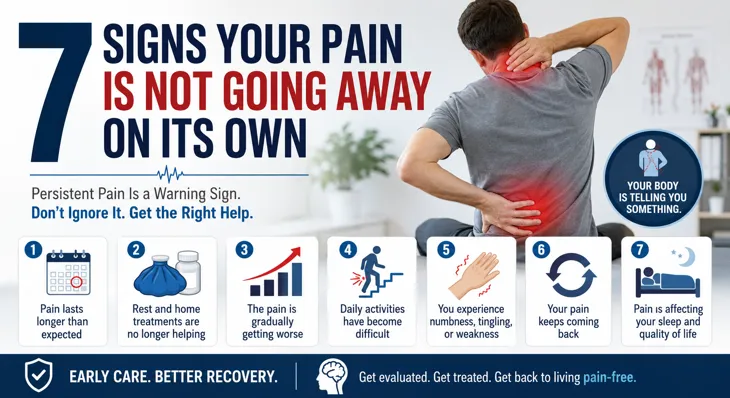
Quick Answer: When Is Pain Not Going Away on Its Own?
Pain may require professional treatment if:
- It lasts longer than a few weeks
- It continues despite rest and home treatment
- It becomes more intense over time
- It limits daily activities
- It causes weakness, numbness, or tingling
- It repeatedly returns after temporary improvement
- It affects sleep, work, or quality of life
Understanding these signs can help you seek treatment before the problem becomes more serious.
Why Some Pain Heals Naturally While Other Pain Doesn't
Most minor injuries follow a predictable healing process. For example:
- Mild muscle strains often improve within 1–3 weeks
- Minor sprains may recover within several weeks
- Post-exercise soreness usually resolves in a few days
When tissues heal properly, inflammation decreases, movement improves, and pain gradually fades. However, pain may continue when:
- The injury has not healed correctly
- There is ongoing tissue irritation
- Muscles are compensating improperly
- Joint mechanics are altered
- Nerve structures are involved
- An underlying medical condition exists
This is often why pain is not improving after rest even when you've tried to take it easy.
Sign #1: Your Pain Has Lasted Longer Than Expected
One of the clearest signs pain will not heal on its own is when it persists beyond the normal healing timeline.
How Long Is Too Long for Pain to Last?
While recovery times vary, ongoing pain beyond expected healing periods should be evaluated. General guidelines include:
- Muscle strain: More than 2–4 weeks
- Joint sprain: More than 4–6 weeks
- Back pain: More than 6 weeks
- Neck pain: More than 4–6 weeks
Pain lasting longer than expected after injury often suggests incomplete healing or other factors contributing to symptoms. If discomfort continues without significant improvement, it may be time to consider a professional assessment.
Sign #2: Rest and Home Treatments Are No Longer Helping
Many people initially manage pain with:
- Rest
- Ice or heat
- Gentle stretching
- Over-the-counter pain medication
- Activity modification
These approaches can be helpful for minor injuries. However, one of the biggest reasons pain continues despite home treatment is that the underlying cause remains unaddressed.
Warning Signs
- Pain returns immediately after activity
- Symptoms improve only temporarily
- Medications provide diminishing relief
- Home exercises are ineffective
When pain keeps returning despite self-care, the problem often requires a more targeted treatment plan. This is one of the most common indicators of when physical therapy is needed for pain relief.
Sign #3: The Pain Is Gradually Getting Worse
Pain should generally improve over time. If symptoms are becoming stronger, more frequent, or affecting larger areas of the body, this can be one of the most important warning signs that your pain is getting worse. Watch for:
- Increased pain intensity
- More frequent flare-ups
- Pain spreading into nearby areas
- Reduced tolerance for normal activities
For example: A mild lower backache that progresses to daily pain or begins radiating to the hips and legs should not be ignored. Increasing symptoms often suggest that the condition is progressing rather than healing.
Sign #4: Daily Activities Have Become Difficult
A major red flag occurs when pain starts interfering with normal life. You should pay attention if pain affects:
- Walking
- Sitting
- Standing
- Driving
- Exercising
- Household tasks
- Work responsibilities
Signs You Need Treatment for Musculoskeletal Pain
Ask yourself:
- Am I avoiding activities because of pain?
- Have I stopped exercising?
- Do simple movements feel difficult?
- Am I moving differently to avoid discomfort?
These compensations may place additional stress on other muscles and joints, creating new problems over time. Loss of function is often more significant than pain intensity itself.
Sign #5: You Experience Numbness, Tingling, or Weakness
Pain accompanied by neurological symptoms requires special attention. Symptoms may include:
- Numbness
- Tingling sensations
- Burning pain
- Muscle weakness
- Reduced grip strength
- Balance difficulties
These signs may indicate:
- Nerve irritation
- Nerve compression
- Disc-related conditions
- Spinal issues
- Certain underlying medical conditions
Symptoms That Indicate Serious Underlying Pain Conditions
Seek prompt medical evaluation if you notice:
- Progressive weakness
- Loss of coordination
- Significant numbness
- Symptoms affecting both arms or legs
Neurological symptoms often require professional assessment to prevent further complications.
Sign #6: Your Pain Keeps Coming Back
Some injuries appear to heal but repeatedly return. This cycle commonly occurs when:
- The root cause was never addressed
- Movement patterns remain dysfunctional
- Muscles are weak or imbalanced
- Joint stability is compromised
How to Tell If Your Injury Is Not Healing Properly
Recurring symptoms often follow a pattern:
- Pain develops
- Rest improves symptoms
- Normal activity resumes
- Pain returns
If this cycle repeats multiple times, there is likely an underlying issue preventing full recovery. A physiotherapist can identify contributing factors such as:
- Poor posture
- Muscle imbalances
- Weakness
- Reduced flexibility
- Movement dysfunction
Addressing these causes helps prevent recurring episodes.
Sign #7: Pain Is Affecting Your Sleep and Quality of Life
Pain should not dominate your daily routine. One of the strongest indicators of when chronic pain needs medical attention is when symptoms begin affecting overall well-being.
Common Quality-of-Life Warning Signs
- Difficulty falling asleep
- Waking due to pain
- Constant fatigue
- Reduced productivity
- Mood changes
- Increased stress
- Loss of enjoyment in activities
Persistent discomfort can create a cycle where: Pain disrupts sleep → Poor sleep increases pain sensitivity → Pain worsens further. Breaking this cycle often requires professional intervention.
Persistent Back and Neck Pain Requires Special Attention
Back and neck pain are among the most common reasons people delay seeking treatment. Many individuals assume these problems will eventually disappear.
Signs Your Back Pain Needs Professional Treatment
Consider evaluation if:
- Pain lasts more than six weeks
- Symptoms radiate into the legs
- Sitting becomes uncomfortable
- Daily activities are restricted
- Pain repeatedly returns
Persistent Neck Pain Warning Signs
Seek professional assessment when:
- Neck pain lasts several weeks
- Headaches become frequent
- Pain radiates into the shoulder or arm
- Stiffness limits movement
- Numbness or tingling develops
Early treatment often prevents these conditions from becoming chronic.
When Pain Becomes Chronic
Pain is generally considered chronic when it persists for three months or longer. When pain becomes chronic, changes can occur within:
- Muscles
- Joints
- Connective tissues
- Nervous system pathways
This can make recovery more complex.
Common Effects of Chronic Pain
- Reduced mobility
- Muscle weakness
- Fear of movement
- Physical deconditioning
- Ongoing inflammation
- Sleep disturbances
The earlier chronic pain is addressed, the better the chances of restoring normal function.
How Physiotherapy Can Help Ongoing Pain
Many people wonder how to know if pain requires physiotherapy. Physiotherapy focuses on identifying the source of pain rather than simply masking symptoms. A physiotherapist may assess:
- Movement quality
- Joint mobility
- Muscle strength
- Posture
- Balance
- Functional limitations
Treatment may include:
- Manual therapy
- Therapeutic exercise
- Mobility training
- Strengthening programs
- Postural correction
- Activity modification guidance
When to See a Physiotherapist for Ongoing Pain
Consider scheduling an evaluation if:
- Pain lasts more than a few weeks
- Daily activities are affected
- Recovery has stalled
- Symptoms repeatedly return
- Movement feels restricted
- Home remedies are no longer working
Early intervention often reduces recovery time and prevents future complications.
Common Mistakes People Make When Waiting for Pain to Improve
Many individuals unintentionally prolong recovery by:
- Ignoring symptoms for months
- Resting completely for too long
- Continuing painful activities
- Relying solely on medication
- Returning to sports too early
- Delaying professional assessment
The goal is not to seek treatment for every ache or soreness, but to recognize when symptoms are no longer following a normal healing pattern.
Key Red Flags You Should Never Ignore
The following red flags for muscle and joint pain deserve professional evaluation:
- Pain lasting longer than expected
- Increasing pain intensity
- Persistent swelling
- Significant weakness
- Numbness or tingling
- Recurrent injuries
- Loss of mobility
- Difficulty sleeping because of pain
- Pain interfering with work or daily activities
Recognizing these signs early can help prevent long-term complications.
Knowing When to Take Action
Most minor aches and injuries improve naturally. However, if pain persists, worsens, repeatedly returns, or begins interfering with your daily life, it may be time to seek professional help. The 7 signs your pain is not going away on its own include prolonged symptoms, failed self-care efforts, worsening discomfort, reduced function, neurological symptoms, recurring pain, and declining quality of life. Listening to these warning signals can help you address problems early, improve recovery outcomes, and return to normal activities with greater confidence and less discomfort.