
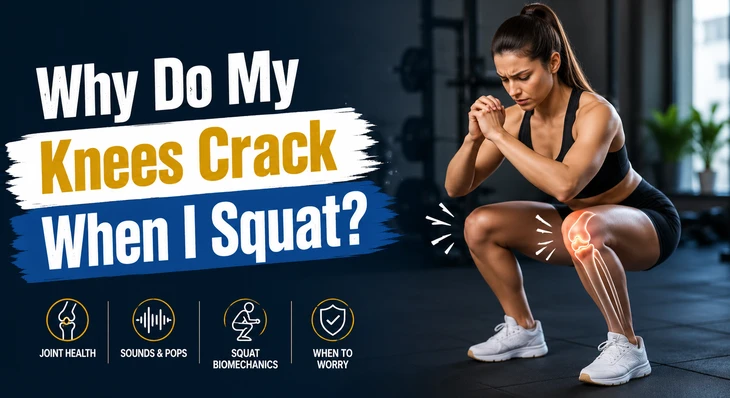
- Quick Answer: Why Do My Knees Crack When I Squat?
- Understanding Knee Sounds During Squats
- Is Knee Cracking During Squats Normal?
- Gas Bubbles Inside the Joint
- Tendons and Ligaments Moving Across Bone
- Cartilage Changes and Joint Surface Irregularities
- Runner's Knee and Cracking Sounds
- Why Do Knees Make Noise When Squatting After Workouts?
- Poor Squat Mechanics Can Increase Knee Noise
- When Knee Cracking Is Accompanied by Pain
- When Should You Worry About Knee Cracking Sounds?
- How to Stop Knees From Cracking When I Squat
- Effective Exercises for Knee Clicking and Popping
- Common Myths About Cracking Knees
- Key Takeaways for Healthy Squatting
Why Do My Knees Crack When I Squat? Squatting is one of the most common movements people perform during workouts, sports, and everyday activities. Yet many people become concerned when they hear popping, clicking, or cracking sounds coming from their knees during a squat. If you've ever wondered, "Why do my knees crack when I squat?" you're not alone. In many cases, knee cracking during squats is harmless. However, sometimes these sounds can signal an underlying problem, especially when accompanied by pain, swelling, instability, or reduced mobility. This guide explains the most common causes of knee cracking when squatting, when it is normal, when it may indicate an injury, and what you can do to protect your knee health.
Quick Answer: Why Do My Knees Crack When I Squat?
Most knee cracking sounds occur because of:
- Gas bubbles are released inside the joint
- Tendons or ligaments moving over bone
- Normal joint movement
- Mild cartilage irregularities
- Muscle imbalances affecting knee tracking
If the sound occurs without pain, swelling, or stiffness, it is usually not a cause for concern. However, painful knee cracking during squats may indicate cartilage damage, patellofemoral pain syndrome, arthritis, or other knee conditions.
Understanding Knee Sounds During Squats
Your knees are complex joints made up of bones, cartilage, ligaments, tendons, muscles, and fluid-filled spaces. During movement, these structures interact continuously. Knee joint noises during exercise can sound like:
- Cracking
- Popping
- Clicking
- Grinding
- Snapping
The medical term often used for these sounds is "crepitus."
What Is Crepitus?
Crepitus in the knee when squatting refers to audible or palpable grinding, crackling, or popping sensations within the joint. Crepitus can occur because of:
- Air bubbles collapsing within joint fluid
- Cartilage surfaces rubbing together
- Tendon movement
- Age-related changes
Not all crepitus indicates damage.
Is Knee Cracking During Squats Normal?
One of the most common questions is: Is knee cracking during squats normal? In many healthy individuals, the answer is yes. Normal knee cracking typically:
- Happens occasionally
- Is not painful
- Does not limit movement
- Is not associated with swelling
- Does not worsen over time
Athletes, runners, gym-goers, and even sedentary individuals may experience an occasional popping sound in their knees when exercising without any structural damage.
Signs Your Knee Cracking Is Likely Harmless
- No pain before, during, or after squats
- Full range of motion
- No swelling
- No instability
- Normal daily function
Knee cracking during squats without pain is generally considered a normal biomechanical phenomenon.
Gas Bubbles Inside the Joint
One of the simplest explanations for why my knees pop when I squat involves synovial fluid. The knee contains lubricating fluid that helps reduce friction between joint surfaces. Dissolved gases naturally exist within this fluid. During movement:
- Joint pressure changes.
- Gas bubbles form or collapse.
- A cracking or popping sound occurs.
This process is similar to cracking knuckles and is usually harmless. Characteristics include:
- Sudden pop
- No pain
- Temporary occurrence
- No lingering symptoms
Tendons and Ligaments Moving Across Bone
Another common cause of knee clicking when squatting is soft-tissue movement. As you bend and straighten your knee:
- Tendons shift position
- Ligaments glide over bony structures
- Muscles change tension
Sometimes these tissues snap slightly as they move, creating an audible click or pop. This often becomes more noticeable when:
- Starting a new workout routine
- Increasing training intensity
- Experiencing muscle tightness
- Returning to exercise after inactivity
Cartilage Changes and Joint Surface Irregularities
Cartilage acts as a smooth cushion between bones. When cartilage becomes roughened or uneven, movement can create:
- Clicking
- Grinding
- Crackling sounds
Cartilage wear, causing knee cracking, becomes more common with:
- Aging
- Previous injuries
- Repetitive stress
- Osteoarthritis
Unlike harmless popping, cartilage-related sounds may gradually become more frequent over time.
Symptoms That May Accompany Cartilage Problems
- Stiffness
- Swelling
- Pain during activity
- Reduced mobility
- Grinding sensation
Some individuals experience a noticeable knee-grinding sensation while squatting, as cartilage surfaces become less smooth.
Runner's Knee and Cracking Sounds
Runner's knee and knee cracking sounds often occur together. Runner's knee, also known as patellofemoral pain syndrome, develops when the kneecap does not track properly along the femur. Common symptoms include:
- Pain behind the kneecap
- Clicking sensations
- Discomfort when squatting
- Pain while climbing stairs
- Knee soreness after prolonged sitting
Risk factors include:
- Weak hip muscles
- Tight quadriceps
- Flat feet
- Overtraining
- Poor movement mechanics
Many active individuals first notice knee popping and pain when squatting before receiving a diagnosis of runner's knee.
Why Do Knees Make Noise When Squatting After Workouts?
Many people notice their knees make noise when squatting after intense exercise. Several factors contribute:
Temporary Muscle Fatigue
Fatigued muscles provide less support around the knee joint. This may result in:
- Altered movement patterns
- Increased joint stress
- More noticeable popping sounds
Tight Surrounding Tissues
After workouts, muscles and tendons may become tight. This can increase friction and contribute to:
- Knee cracking after gym workouts
- Clicking sensations
- Temporary stiffness
Increased Awareness
Sometimes the sounds were already present, but post-workout fatigue makes people more aware of them.
Poor Squat Mechanics Can Increase Knee Noise
Squatting technique significantly affects knee function. Common form mistakes include:
- Knees collapsing inward
- Limited ankle mobility
- Excessive forward lean
- Uneven weight distribution
- Inadequate hip engagement
Poor mechanics can increase stress on:
- Patella
- Cartilage
- Tendons
- Ligaments
Improving squat form often reduces knee popping when bending the knees during exercise.
Squat Form Checklist
Before descending into a squat:
- Keep feet shoulder-width apart
- Engage core muscles
- Allow knees to track over toes
- Maintain neutral spine
- Distribute weight evenly through the feet
Proper technique improves joint alignment and may reduce unnecessary noises.
When Knee Cracking Is Accompanied by Pain
Pain changes the significance of knee sounds. Painful knee cracking during squats should not be ignored. Potential causes include:
Meniscus Injuries
The meniscus acts as a shock absorber within the knee. Symptoms include:
- Clicking
- Locking
- Joint line pain
- Swelling
Patellofemoral Pain Syndrome
Common in athletes and active individuals. Symptoms include:
- Front knee pain
- Cracking sensations
- Pain during squats and stairs
Osteoarthritis
Wear-and-tear arthritis can produce:
- Grinding
- Cracking
- Stiffness
- Swelling
Cartilage Damage
Damaged cartilage may create:
- Rough movement
- Persistent popping
- Pain during weight-bearing activities
Knee popping and pain when squatting often warrants evaluation by a healthcare professional.
When Should You Worry About Knee Cracking Sounds?
Many people ask when to worry about knee cracking sounds. Seek medical evaluation if knee sounds occur alongside:
- Persistent pain
- Swelling
- Locking
- Catching sensations
- Knee instability
- Reduced range of motion
- Inability to bear weight
- Recent injury
The sound itself is usually less important than the symptoms accompanying it.
Red Flags
Contact a healthcare provider if:
- Pain worsens over time
- The knee repeatedly gives way
- Swelling develops after activity
- Squatting becomes increasingly difficult
How to Stop Knees From Cracking When I Squat
If you're wondering how to stop knees from cracking when I squat, the solution depends on the cause.
Improve Mobility
Focus on:
- Ankle mobility exercises
- Hip stretches
- Quadriceps flexibility
- Hamstring mobility
Improved mobility can reduce stress on the knee joint.
Strengthen Supporting Muscles
Strong muscles help stabilize the knee. Key areas include:
- Glutes
- Quadriceps
- Hamstrings
- Calves
- Core
Warm Up Properly
Before squatting:
- Walk for 5–10 minutes
- Perform dynamic stretches
- Activate hip muscles
- Practice bodyweight squats
Progress Training Gradually
Avoid:
- Sudden weight increases
- Excessive training volume
- Poor recovery habits
Gradual progression protects joint health.
Effective Exercises for Knee Clicking and Popping
Certain exercises for knee clicking and popping can improve alignment and stability.
Straight Leg Raises
Benefits:
- Strengthens quadriceps
- Minimal knee stress
- Improves support around the kneecap
Glute Bridges
Benefits:
- Activates glute muscles
- Improves lower-body mechanics
- Reduces knee strain
Clamshells
Benefits:
- Strengthens hip stabilizers
- Enhances knee tracking
- Supports proper squat mechanics
Step-Ups
Benefits:
- Builds functional strength
- Improves balance
- Enhances joint control
Wall Sits
Benefits:
- Strengthens quadriceps
- Improves muscular endurance
- Supports knee stability
Perform these exercises consistently for several weeks to notice improvements.
Common Myths About Cracking Knees
Myth: Cracking Means Arthritis
Not necessarily. Many people with healthy joints experience cracking sounds without developing arthritis.
Myth: You Should Stop Squatting Completely
In most cases, no. If there is no pain, continuing to squat with proper form is usually safe.
Myth: Every Pop Indicates Injury
Most pops are harmless and result from normal joint movement.
Myth: Silence Means Healthy Knees
Some injured knees make no sound at all. Symptoms matter more than noise.
Key Takeaways for Healthy Squatting
If you've been asking yourself, "Why do my knees crack when I squat?" remember that knee noises are extremely common. Most cases are caused by:
- Gas bubbles within the joint
- Tendon movement
- Normal crepitus
- Minor cartilage irregularities
Knee cracking during squats without pain is generally harmless and does not require treatment. However, when cracking is accompanied by pain, swelling, instability, or a grinding sensation, further evaluation may be necessary. Maintaining good squat technique, strengthening supporting muscles, improving mobility, and gradually progressing workouts can help reduce knee joint noise during exercise while supporting long-term knee health.