
- Why Are Shoulder Injuries So Common in Cricket?
- Quick Answer: What Causes Shoulder Pain in Cricket Players?
- How Bowling Affects the Shoulder Joint
- Most Common Cricket-Related Shoulder Injuries
- Cricket Throwing Injuries Causing Shoulder Pain
- Overuse of Shoulder Injuries in Cricket
- Warning Signs of Shoulder Injuries in Cricketers
- Shoulder Injury Symptoms in Cricket Players
- Preventing Shoulder Injuries While Playing Cricket
- Shoulder Strengthening Exercises for Cricket Players
- Shoulder Rehabilitation Exercises for Cricketers
- Amateur Cricket Player Shoulder Injury Treatment
- Recurring Shoulder Pain After Cricket Matches
- Sports Physiotherapy for Cricket Shoulder Injuries
- When to Seek Treatment for Cricket Shoulder Pain
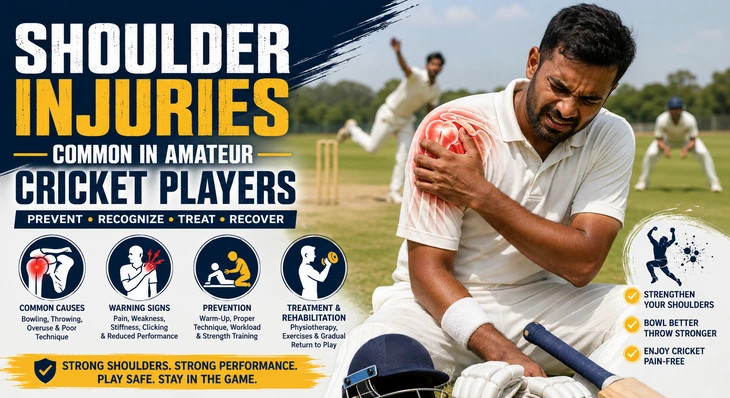
Shoulder injuries are among the most frequent physical complaints in recreational cricket. Whether you are a fast bowler, all-rounder, wicketkeeper, or fielder, repetitive throwing, bowling, and overhead movements place significant stress on the shoulder joint. Many players ignore early discomfort, assuming it is normal soreness, only to find that the pain gradually worsens and affects performance. Understanding shoulder injuries common in amateur cricket players can help prevent long-term damage, reduce time away from the game, and improve overall athletic performance. This guide explains the causes, symptoms, prevention strategies, treatment options, and rehabilitation methods that every cricketer should know.
Why Are Shoulder Injuries So Common in Cricket?
Cricket involves repeated overhead movements that place high demands on the shoulder complex. Bowling, throwing from the boundary, diving in the field, and batting all require shoulder stability, strength, and mobility. The shoulder is one of the most mobile joints in the body, but that mobility comes at the cost of stability. As a result, even minor technique errors, overtraining, or muscle imbalances can lead to injury. Some of the most common shoulder injuries in amateur cricket players occur because recreational athletes often:
- Skip proper warm-ups
- Play multiple matches without recovery
- Lack shoulder-strengthening routines
- Have poor bowling mechanics
- Ignore minor pain until it becomes severe
- Return to cricket too quickly after injury
Quick Answer: What Causes Shoulder Pain in Cricket Players?
The most common causes of shoulder pain in cricket players include:
- Repetitive bowling actions
- Overhead throwing during fielding
- Rotator cuff strain
- Tendon inflammation
- Shoulder impingement
- Muscle fatigue
- Poor posture
- Weak scapular muscles
- Sudden increases in training load
- Previous shoulder injuries
In many cases, pain develops gradually rather than from a single traumatic event.
How Bowling Affects the Shoulder Joint
Many amateur cricketers underestimate how bowling affects the shoulder joint. During bowling, the shoulder experiences:
- Rapid rotation
- High acceleration forces
- Sudden deceleration after ball release
- Repeated stress across long spells
Fast bowlers are particularly vulnerable because their shoulders absorb greater force compared to spin bowlers. Over time, these repetitive stresses can lead to:
- Tendon irritation
- Muscle strain
- Joint inflammation
- Rotator cuff damage
- Labral injuries
Without adequate recovery, the cumulative load eventually causes pain and reduced performance.
Most Common Cricket-Related Shoulder Injuries
Rotator Cuff Injuries
One of the most frequent rotator cuff injuries in amateur cricketers involves small tears or inflammation in the muscles that stabilize the shoulder. Symptoms include:
- Pain during throwing
- Weakness when lifting the arm
- Night pain
- Reduced bowling speed
- Difficulty reaching overhead
Rotator cuff injuries often begin as mild irritation before progressing into more serious tears.
Shoulder Impingement Syndrome
This condition occurs when shoulder tendons become compressed during movement. Common symptoms:
- Pain when raising the arm
- Sharp pain while bowling
- Clicking sensations
- Reduced range of motion
Shoulder impingement is frequently associated with poor shoulder mechanics and muscle imbalances.
Shoulder Strain from Fast Bowling
A shoulder strain from fast bowling usually affects the muscles surrounding the shoulder blade and rotator cuff. Contributing factors include:
- Excessive bowling workload
- Poor conditioning
- Inadequate warm-up
- Muscle fatigue
Mild strains may heal within a few weeks, while severe strains can require extended rehabilitation.
Labral Injuries
The shoulder labrum is a cartilage structure that helps stabilize the joint. Repetitive overhead motions can damage the labrum, causing:
- Deep shoulder pain
- Clicking sounds
- Instability
- Loss of throwing power
Shoulder Dislocations and Instability
Although less common than overuse injuries, falls or collisions can lead to dislocation. Signs include:
- Severe pain
- Visible deformity
- Inability to move the shoulder
- Recurrent instability episodes
Cricket Throwing Injuries Causing Shoulder Pain
Bowling is not the only culprit. Many cricket throwing injuries, causing shoulder pain, occur during fielding. Long-distance throws repeatedly stress the shoulder's stabilizing structures. Fielders may develop:
- Tendinitis
- Rotator cuff irritation
- Shoulder impingement
- Muscle strains
Boundary fielders are particularly at risk because they frequently perform powerful overhead throws.
Overuse of Shoulder Injuries in Cricket
Many recreational players develop overuse injuries to the shoulder in cricket without realizing it. Unlike acute injuries, overuse injuries occur gradually over weeks or months. Common warning signs include:
- Mild soreness after matches
- Pain that lasts longer each week
- Reduced throwing accuracy
- Loss of bowling speed
- Persistent stiffness
Ignoring these symptoms often leads to more serious problems.
Common Overuse Mistakes
- Playing every weekend without recovery
- Participating in multiple leagues simultaneously
- Bowling despite pain
- Increasing training volume too quickly
- Lack of strength training
Warning Signs of Shoulder Injuries in Cricketers
Recognizing the warning signs of shoulder injuries in cricketers early can prevent long-term damage. Seek attention if you notice:
- Pain during bowling
- Pain while throwing
- Shoulder weakness
- Clicking or popping sounds
- Reduced arm strength
- Stiffness after matches
- Difficulty sleeping on the affected side
- Persistent soreness lasting more than a week
Early treatment typically leads to faster recovery and fewer complications.
Shoulder Injury Symptoms in Cricket Players
Not all injuries present the same way. Common shoulder injury symptoms in cricket players include:
Pain Symptoms
- Sharp pain during activity
- Dull ache after matches
- Pain when lifting the arm
- Pain while reaching overhead
Functional Symptoms
- Reduced bowling pace
- Decreased throwing distance
- Loss of shoulder control
- Difficulty catching high balls
Mechanical Symptoms
- Clicking
- Popping
- Grinding sensations
- Feeling of instability
Monitoring these symptoms helps identify problems before they become severe.
Preventing Shoulder Injuries While Playing Cricket
The good news is that most cricket shoulder injuries and prevention strategies are simple and highly effective.
Follow a Proper Warm-Up
Before every session:
- Light jogging
- Dynamic arm swings
- Shoulder circles
- Resistance band activation
- Mobility drills
A proper warm-up improves blood flow and prepares tissues for activity.
Manage Bowling Workloads
Avoid sudden spikes in bowling volume. Consider:
- Tracking overs bowled
- Scheduling recovery days
- Gradually increasing workloads
- Avoiding excessive bowling during practice
Improve Bowling Technique
Poor mechanics increase shoulder stress. Common issues include:
- Excessive shoulder rotation
- Poor follow-through
- Inadequate trunk involvement
- Arm-dominant bowling action
Working with qualified coaches can significantly reduce injury risk.
Shoulder Strengthening Exercises for Cricket Players
Strong shoulders tolerate the demands of cricket more effectively. Useful shoulder strengthening exercises for cricket players include:
External Rotations
Benefits:
- Strengthens rotator cuff muscles
- Improves joint stability
- Enhances throwing mechanics
Scapular Retractions
Benefits:
- Improves shoulder blade control
- Supports overhead movement
- Reduces impingement risk
Resistance Band Pull-Aparts
Benefits:
- Strengthens upper back muscles
- Improves posture
- Enhances shoulder endurance
Y-T-W Exercises
Benefits:
- Activates stabilizing muscles
- Improves shoulder function
- Builds injury resistance
Perform these exercises two to three times weekly during the season.
Shoulder Rehabilitation Exercises for Cricketers
After injury, carefully selected shoulder rehabilitation exercises for cricketers help restore function and reduce the risk of reinjury.
Phase 1: Pain Reduction
Focus on:
- Gentle mobility exercises
- Ice therapy
- Activity modification
Phase 2: Mobility Restoration
Exercises include:
- Pendulum swings
- Assisted range-of-motion drills
- Stretching exercises
Phase 3: Strength Development
Add:
- Resistance band exercises
- Rotator cuff strengthening
- Scapular stabilization work
Phase 4: Cricket-Specific Training
Progress to:
- Throwing drills
- Bowling simulations
- Fielding practice
- Match preparation activities
Skipping rehabilitation stages often leads to recurring injuries.
Amateur Cricket Player Shoulder Injury Treatment
The best amateur cricket player's shoulder injury treatment depends on the injury's severity and underlying cause.
Initial Management
The first few days often involve:
- Rest
- Ice application
- Compression
- Activity modification
Physiotherapy
Professional assessment helps identify:
- Weak muscles
- Movement restrictions
- Technique issues
- Recovery progress
Exercise-Based Recovery
Research consistently shows that structured rehabilitation programs produce better outcomes than complete rest alone.
Medication
Anti-inflammatory medications may help control pain temporarily, but should not replace rehabilitation.
Surgery
Surgery is generally reserved for:
- Significant tears
- Recurrent dislocations
- Severe labral injuries
- Cases that fail conservative treatment
Most amateur cricket shoulder injuries improve without surgery.
Recurring Shoulder Pain After Cricket Matches
Many players experience recurring shoulder pain after cricket matches and assume it is normal. However, persistent post-match pain often indicates:
- Incomplete recovery
- Poor conditioning
- Rotator cuff weakness
- Excessive workload
- Biomechanical problems
Pain that repeatedly returns deserves professional assessment.
Sports Physiotherapy for Cricket Shoulder Injuries
Sports physiotherapy for cricket shoulder injuries plays an important role in both recovery and prevention. A sports physiotherapist can:
- Assess movement patterns
- Identify strength deficits
- Improve shoulder mobility
- Design rehabilitation plans
- Monitor return-to-play progression
- Correct biomechanical issues
When to Seek Treatment for Cricket Shoulder Pain
Knowing when to seek treatment for cricket shoulder pain can prevent minor issues from becoming major injuries. Seek professional assessment if:
- Pain lasts longer than one week
- Symptoms worsen during activity
- You experience weakness
- Shoulder motion becomes restricted
- Clicking or instability develops
- Pain interferes with sleep
- Bowling speed or throwing ability decreases significantly
Building Long-Term Shoulder Health for Cricket
For long-term shoulder health:
- Warm up properly before every session
- Follow structured bowling workloads
- Strengthen the rotator cuff regularly
- Train the upper back and scapular muscles
- Improve bowling mechanics
- Prioritize recovery and sleep
- Address minor pain early
- Include mobility work in weekly training
Shoulder pain should never be considered a normal part of playing cricket. By understanding shoulder injuries common in amateur cricket players, recognizing early warning signs, and implementing effective prevention strategies, recreational cricketers can stay healthy, perform better, and enjoy the game for years to come.