
- Quick Answer: How Long Does an Ankle Sprain Take to Heal?
- Understanding the Ankle Sprain Healing Process
- Week 1: Managing Pain, Swelling, and Protection
- Week 2: Beginning Controlled Mobility
- Week 3: Regaining Normal Walking Patterns
- Week 4: Building Strength and Stability
- Week 5–6: Returning to Everyday Activities
- Week 6–8: Advanced Rehabilitation
- Week 8–12: Recovery From Severe Ankle Sprains
- Return to Sports After Ankle Sprain Timeline
- Physiotherapy for Ankle Sprain Recovery
- Mild, Moderate, and Severe Recovery Timelines Compared
- Ankle Sprain Recovery Tips for Faster Healing
- When Should You Seek Medical Attention?
- The Bottom Line on Ankle Recovery
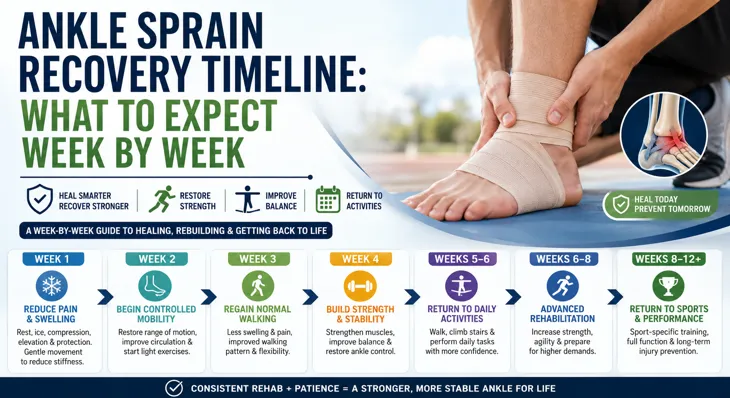
An ankle sprain can happen in a split second, but recovery often takes weeks. Whether you twisted your ankle while playing sports, walking on an uneven surface, or stepping awkwardly off a curb, understanding the ankle sprain recovery timeline: what to expect week by week can help you heal safely and avoid long-term problems. Many people assume a sprained ankle will recover on its own within a few days. In reality, ligament healing follows a structured process. Recovery speed depends on the severity of the injury, the specific ligaments involved, your age, overall health, and how well you follow rehabilitation recommendations. This guide explains the ankle sprain recovery week by week, outlines the different healing stages, and shows what you can realistically expect from the first day of injury through your return to normal activities and sports.
Quick Answer: How Long Does an Ankle Sprain Take to Heal?
The answer depends on the grade of the sprain:
- Grade 1 (Mild): 1–3 weeks
- Grade 2 (Moderate): 3–8 weeks
- Grade 3 (Severe): 8–12 weeks or longer
Understanding the Ankle Sprain Healing Process
Before looking at the timeline, it helps to understand the basic stages of ankle sprain healing. When an ankle sprain occurs, the ligaments that stabilize the joint become stretched or torn. The body then repairs the damaged tissue through three major phases:
Phase 1: Inflammation (Days 1–7)
During this phase:
- Swelling develops
- Pain increases with movement
- Bruising may appear
- The body sends healing cells to the injured area
Phase 2: Repair and Tissue Formation (Weeks 2–6)
During repair:
- New collagen fibers form
- Swelling gradually decreases
- Pain begins to improve
- Controlled movement becomes important
Phase 3: Remodeling and Strengthening (Weeks 6–12+)
In this phase:
- Ligaments become stronger
- Balance and stability improve
- Functional exercises increase
- Return-to-sport activities begin
These ankle ligament injury recovery stages occur naturally but can be influenced by the quality of rehabilitation.
Week 1: Managing Pain, Swelling, and Protection
The first week is often the most uncomfortable period of the ankle sprain rehabilitation timeline.
What to Expect
Common symptoms include:
- Significant swelling
- Difficulty walking
- Tenderness around the ankle
- Bruising
- Reduced range of motion
Many people ask, how long does swelling last after an ankle sprain? Swelling is usually most severe during the first 48–72 hours and may continue for several weeks, especially in moderate and severe injuries.
What You Should Do
Focus on protecting the ankle:
- Rest from aggravating activities
- Apply ice for 15–20 minutes several times daily
- Use compression if recommended
- Elevate the ankle above heart level
- Use crutches if walking is painful
Early Movement Matters
Complete immobilization is rarely ideal. Gentle exercises may include:
- Ankle pumps
- Toe movements
- Alphabet exercises with the foot
These movements help reduce stiffness without stressing healing tissues.
Week 2: Beginning Controlled Mobility
The second week marks an important transition in the week-by-week ankle ligament recovery process.
What to Expect
Many people notice:
- Reduced swelling
- Less pain at rest
- Improved walking ability
- Better ankle mobility
However, sudden movements may still trigger discomfort.
Early Recovery Goals
Focus on:
- Restoring motion
- Improving circulation
- Preventing stiffness
- Gradually increasing weight-bearing
Ankle Sprain Recovery Exercises by Week
Common exercises during week 2 include:
- Ankle circles
- Calf stretching
- Towel-assisted stretches
- Seated heel raises
These activities encourage proper tissue healing without overloading the injured ligament.
Week 3: Regaining Normal Walking Patterns
One of the most common questions is:
When Can I Walk Normally After an Ankle Sprain?
For many mild sprains, normal walking begins returning during weeks 2–3. For moderate injuries, it may take 4–6 weeks. During week 3, most patients experience:
- Reduced limping
- Improved confidence while walking
- Better ankle flexibility
- Less tenderness
Important Warning
Walking without pain does not mean the ligament is fully healed. Returning to intense activities too early is one of the leading causes of recurrent ankle sprains.
Week 4: Building Strength and Stability
Week 4 often represents a major turning point in the ankle sprain healing stages timeline.
What to Expect
You may notice:
- Minimal swelling
- Near-normal walking
- Improved balance
- Better joint control
Strengthening Exercises
Rehabilitation becomes more active. Exercises often include:
- Resistance band exercises
- Standing heel raises
- Mini squats
- Step-ups
The goal is to rebuild muscle support around the ankle and lower leg.
Why Balance Training Matters
After a sprain, the body's position-sensing system can become impaired. Balance exercises help restore:
- Joint awareness
- Coordination
- Stability
- Injury prevention
Week 5–6: Returning to Everyday Activities
This period is especially important in the moderate-ankle-sprain recovery-time pathway.
What to Expect
Most people can:
- Walk comfortably
- Climb stairs normally
- Perform daily tasks without limitation
- Tolerate longer periods of standing
Balance and Strengthening Progression
Common ankle sprain balance and strengthening exercises include:
- Single-leg standing
- Heel-to-toe walking
- Dynamic balance drills
- Resistance band strengthening
At this stage, rehabilitation shifts from healing to performance restoration.
Signs Your Ankle Sprain Is Healing Properly
Positive indicators include:
- Decreasing pain
- Reduced swelling
- Improved mobility
- Better balance
- Increased strength
- Greater confidence during movement
These are strong signs your ankle sprain is healing properly.
Week 6–8: Advanced Rehabilitation
For many moderate injuries, this stage represents the final part of the primary ankle sprain recovery timeline.
Functional Recovery Focus
Exercises become more demanding:
- Jogging progression
- Lateral movements
- Agility drills
- Controlled jumping
The objective is to prepare the ankle for real-world demands.
Common Mistake
Many people stop rehabilitation once pain disappears. Unfortunately, lingering weakness can remain even after symptoms improve. This increases the risk of:
- Re-injury
- Chronic ankle instability
- Repeated sprains
- Long-term joint problems
Week 8–12: Recovery From Severe Ankle Sprains
The healing process for a severe ankle sprain requires patience. Grade 3 sprains involve significant ligament damage and often need longer rehabilitation.
What to Expect
Recovery may include:
- Ongoing strengthening
- Advanced balance training
- Sport-specific exercises
- Gradual return to impact activities
Physical Milestones
Patients should be able to:
- Walk pain-free
- Maintain single-leg balance
- Perform hopping drills
- Demonstrate good ankle control
The ligament continues to remodel for months after symptom resolution.
Return to Sports After Ankle Sprain Timeline
Athletes frequently ask about the return to sports after an ankle sprain timeline. General guidelines include:
Mild Sprain
- Light activity: 1–2 weeks
- Sport participation: 2–4 weeks
Moderate Sprain
- Light jogging: 4–6 weeks
- Sports: 6–8 weeks
Severe Sprain
- Running: 8–12 weeks
- Competitive sports: 12 weeks or longer
Return should be based on function, not just time.
Safe Return-to-Sport Checklist
Before returning to sports, you should have:
- Full ankle motion
- Normal walking
- No swelling after exercise
- Good balance
- Full strength
- Ability to jump and land comfortably
Physiotherapy for Ankle Sprain Recovery
Many individuals recover faster from an ankle sprain with physiotherapy. A physiotherapist can help by:
- Assessing injury severity
- Creating a structured rehabilitation plan
- Monitoring progress
- Improving balance and strength
- Reducing re-injury risk
Treatments Often Used
Depending on the stage of healing:
- Manual therapy
- Mobility exercises
- Strength training
- Balance retraining
- Gait correction
- Sport-specific rehabilitation
Professional guidance is particularly valuable for moderate and severe sprains.
Mild, Moderate, and Severe Recovery Timelines Compared
Mild Ankle Sprain Recovery Timeline
Typical characteristics:
- Minor ligament stretching
- Mild swelling
- Walking possible with minimal discomfort
Expected recovery:
- 1–3 weeks
Moderate Ankle Sprain Recovery Time
Typical characteristics:
- Partial ligament tear
- Noticeable swelling and bruising
- Limping common
Expected recovery:
- 3–8 weeks
Severe Ankle Sprain Healing Process
Typical characteristics:
- Complete ligament rupture
- Significant instability
- Difficulty bearing weight
Expected recovery:
- 8–12 weeks or longer
Understanding injury severity helps set realistic expectations.
Ankle Sprain Recovery Tips for Faster Healing
If you're looking for ankle sprain recovery tips to speed healing, focus on smart rehabilitation rather than rushing it.
Do
- Follow a progressive exercise plan
- Stay consistent with rehabilitation
- Manage swelling appropriately
- Wear supportive footwear
- Prioritize balance training
Avoid
- Returning to sports too soon
- Ignoring persistent swelling
- Skipping strengthening exercises
- Staying inactive for prolonged periods
- Assuming pain-free means fully healed
Learning how to recover from a sprained ankle safely often determines whether you experience a full recovery or recurring ankle problems.
When Should You Seek Medical Attention?
Consult a healthcare professional if you experience:
- Severe swelling immediately after injury
- Inability to bear weight
- Persistent instability
- Numbness or tingling
- Pain that worsens over time
- Symptoms lasting longer than expected
Some injuries that appear to be simple sprains may involve fractures, tendon injuries, or cartilage damage.
The Bottom Line on Ankle Recovery
The ankle sprain recovery timeline: what to expect week by week varies based on injury severity, rehabilitation quality, and individual healing capacity. Most mild sprains improve within a few weeks, while moderate and severe injuries may require several months of structured recovery. The key stages include controlling swelling during week 1, restoring movement during weeks 2–3, rebuilding strength and balance during weeks 4–8, and gradually returning to sport or higher-level activities thereafter. Understanding the ankle sprain recovery process, week by week, allows you to set realistic expectations, avoid common mistakes, and support long-term ankle health. Recovery is not simply about eliminating pain. The ultimate goal is restoring strength, stability, balance, and confidence so you can return to daily activities and sports without fear of re-injury.