
- The Typical Frozen Shoulder Recovery Timeline
- How Long Does Frozen Shoulder Last?
- Can Frozen Shoulder Heal on Its Own?
- Why Is Frozen Shoulder Recovery So Slow?
- Factors Affecting Frozen Shoulder Recovery
- Frozen Shoulder Treatment and Recovery Time
- Frozen Shoulder Recovery Without Surgery
- How Quickly Can Frozen Shoulder Improve?
- Frozen Shoulder Physical Therapy Recovery
- Frozen Shoulder Recovery Exercises
- Frozen Shoulder Recovery After Steroid Injection
- Frozen Shoulder Pain Relief and Healing Strategies
- Frozen Shoulder Symptoms and Recovery Stages
- Frozen Shoulder Range of Motion Recovery
- When to See a Doctor for Frozen Shoulder
Frozen shoulder recovery usually takes 1 to 3 years, depending on the severity of the condition, the stage at which treatment begins, and how consistently rehabilitation exercises are performed. Some people recover within 12 to 18 months, while others may experience lingering stiffness for several years. Most patients gradually regain shoulder function without surgery, but recovery can be slow and requires patience. Understanding the typical frozen shoulder recovery time can help set realistic expectations and reduce frustration during the healing process. While pain often improves before mobility returns, each stage of recovery follows a predictable pattern.
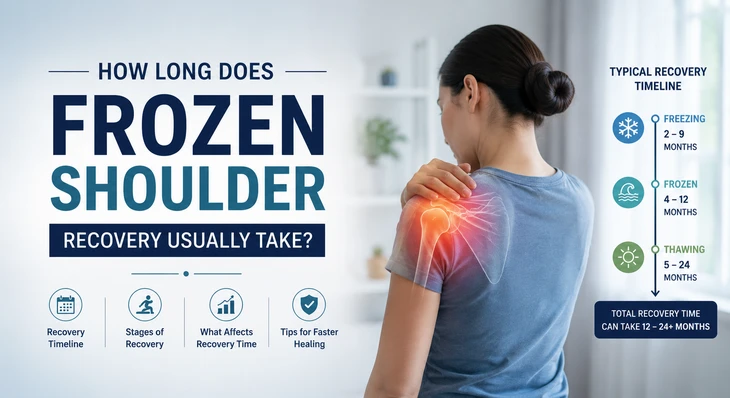
The Typical Frozen Shoulder Recovery Timeline
If you're wondering how long frozen shoulder recovery usually takes, the answer depends largely on the stage of the condition.Frozen shoulder, also known as adhesive capsulitis, typically progresses through three phases:
- Freezing Stage
- Frozen Stage
- Thawing Stage
Together, these stages form the overall adhesive capsulitis recovery timeline.
Freezing Stage: 2 to 9 Months
This is the most painful phase. Common symptoms include:
- Gradually increasing shoulder pain
- Pain that worsens at night
- Difficulty reaching overhead
- Reduced shoulder movement
During this phase, inflammation develops within the shoulder capsule, causing stiffness and pain. Recovery focus:
- Pain management
- Gentle stretching
- Maintaining available motion
- Avoiding aggressive exercises
Frozen Stage: 4 to 12 Months
Pain may decrease, but stiffness becomes more noticeable. People often struggle with:
- Putting on clothing
- Reaching behind the back
- Lifting objects overhead
- Daily activities requiring shoulder mobility
The shoulder capsule thickens and tightens, significantly restricting movement. Recovery focus:
- Physical therapy
- Range-of-motion exercises
- Gradual mobility restoration
Thawing Stage: 6 to 24 Months
This stage marks true recovery. The shoulder slowly regains flexibility and function. During this phase:
- Pain continues to improve
- Mobility gradually returns
- Strength rebuilding begins
- Daily activities become easier
This period represents the majority of the frozen shoulder healing timeline.
How Long Does Frozen Shoulder Last?
Many patients ask, how long does frozen shoulder last from beginning to end? Typical durations include:
| Severity | Average Duration |
|---|---|
| Mild Cases | 12–18 months |
| Moderate Cases | 18–24 months |
| Severe Cases | 2–3 years |
| Untreated Cases | Up to 4 years or longer |
Although symptoms often improve naturally, complete recovery may take considerable time.
Can Frozen Shoulder Heal on Its Own?
Yes, can frozen shoulder heal on its own is a common question, and the answer is often yes. However, healing without treatment does not mean a quick recovery. Many people experience improvement over time, but stiffness and reduced mobility may persist for months or even years. Without treatment:
- Pain can last longer
- Stiffness may become more severe
- Daily activities become increasingly difficult
- Recovery may take significantly longer
Seeking treatment early often improves comfort and function during recovery.
Why Is Frozen Shoulder Recovery So Slow?
Many patients wonder, why is frozen shoulder recovery so slow? Unlike a muscle strain or minor injury, frozen shoulder involves thickening and tightening of the shoulder capsule. Scar-like tissue develops around the joint, reducing movement and flexibility. Recovery requires:
- Gradual stretching of tight tissues
- Reduction of inflammation
- Restoration of normal joint movement
- Strength rebuilding
Because connective tissue heals slowly, recovery naturally takes longer than with many other shoulder conditions.
Factors Affecting Frozen Shoulder Recovery
Several important factors can influence how long does it take to recover from frozen shoulder.
Early Treatment
Patients who begin treatment soon after symptoms develop often recover more efficiently. Benefits include:
- Less severe stiffness
- Better preservation of movement
- Improved treatment response
Diabetes
People with diabetes frequently experience:
- More severe adhesive capsulitis
- Longer recovery times
- Greater risk of prolonged stiffness
Age and Activity Level
Recovery may be slower in:
- Older adults
- Individuals with sedentary lifestyles
- People with underlying health conditions
Commitment to Rehabilitation
Consistent stretching and therapy sessions often make a significant difference in overall recovery.
Frozen Shoulder Treatment and Recovery Time
Understanding the connection between frozen shoulder treatment and recovery time can help patients make informed decisions. Common treatment options include:
Physical Therapy
Physical therapy remains one of the most effective treatments. Goals include:
- Improving flexibility
- Restoring shoulder movement
- Preventing additional stiffness
Anti-Inflammatory Medications
These medications help manage pain and allow patients to participate more comfortably in rehabilitation.
Corticosteroid Injections
Steroid injections may:
- Reduce inflammation
- Improve short-term mobility
- Ease pain during the freezing stage
Surgical Intervention
Although uncommon, surgery may be considered when conservative treatments fail. Options may include:
- Manipulation under anesthesia
- Arthroscopic capsular release
Most patients recover without surgery.
Frozen Shoulder Recovery Without Surgery
The majority of people recover from frozen shoulder without surgery. Non-surgical treatment often includes:
- Physical therapy
- Home stretching routines
- Pain management
- Activity modifications
Many patients regain substantial function through conservative care alone. Signs of improvement include:
- Reduced nighttime pain
- Improved shoulder movement
- Easier performance of daily activities
- Better overall comfort
How Quickly Can Frozen Shoulder Improve?
One of the most common questions is how quickly frozen shoulder can improve. The answer varies based on the stage of the condition and the consistency of treatment. In general:
- Pain relief may occur within weeks
- Mobility improvements often take months
- Full recovery can require one to three years
Recovery is usually gradual rather than dramatic.
Frozen Shoulder Physical Therapy Recovery
Successful frozen shoulder physical therapy recovery depends heavily on consistency. Physical therapy programs typically include:
Stretching Exercises
These focus on:
- Forward elevation
- External rotation
- Internal rotation
Mobility Training
Gentle movement exercises help improve flexibility without worsening symptoms.
Strengthening Exercises
As mobility returns, strengthening exercises help stabilize the shoulder and restore function. Patients who consistently follow therapy recommendations often achieve better long-term results.
Frozen Shoulder Recovery Exercises
Effective frozen shoulder recovery exercises help restore flexibility and reduce stiffness. Common examples include:
Pendulum Exercise
Benefits:
- Gentle movement
- Reduced stiffness
- Improved circulation
Finger Walk Exercise
Helps improve:
- Overhead reach
- Shoulder mobility
Towel Stretch
Supports:
- Internal rotation
- Flexibility improvement
Cross-Body Stretch
Can improve:
- Posterior shoulder flexibility
- Overall range of motion
Exercises should be performed within comfortable limits and according to professional guidance.
Frozen Shoulder Recovery After Steroid Injection
Many patients experience improvement during frozen shoulder recovery after a steroid injection. Typical timeline:
First Week
- Inflammation begins decreasing
- Pain may improve
Two to Six Weeks
- Better comfort during therapy
- Increased shoulder mobility
Long-Term Recovery
When combined with rehabilitation exercises, steroid injections may accelerate progress during early recovery stages. However, injections alone do not resolve the condition.
Frozen Shoulder Pain Relief and Healing Strategies
Successful frozen shoulder pain relief and healing often involves multiple approaches. Helpful strategies include:
- Applying heat before stretching
- Using ice after exercises if soreness occurs
- Maintaining proper posture
- Staying active within comfortable limits
- Following treatment recommendations consistently
Managing pain effectively allows patients to participate more fully in rehabilitation.
Frozen Shoulder Symptoms and Recovery Stages
Recognizing the symptoms of frozen shoulder and its recovery stages can help patients understand their progress.
Early Stage
Symptoms often include:
- Increasing pain
- Difficulty sleeping
- Reduced shoulder movement
Middle Stage
Common signs include:
- Severe stiffness
- Limited function
- Difficulty performing routine tasks
Recovery Stage
Patients often notice:
- Reduced pain
- Improved flexibility
- Greater ease during daily activities
Progress may be gradual, but it becomes noticeable over time.
Frozen Shoulder Range of Motion Recovery
Many patients worry about the recovery of the range of motion in frozen shoulder.In most cases, significant improvement is possible. Recovery typically follows this sequence:
- Pain decreases
- Flexibility improves
- Daily function returns
- Strength increases
- Motion continues to recover
Although some people experience minor long-term limitations, severe permanent loss of movement is uncommon.
When to See a Doctor for Frozen Shoulder
Knowing when to see a doctor for frozen shoulder is important. Seek medical attention if:
- Pain persists for several weeks
- Shoulder movement continues worsening
- Sleep is frequently disrupted
- Daily activities become difficult
- Symptoms interfere with work or exercise
Early evaluation can help confirm the diagnosis and rule out other shoulder conditions.
Quick Recovery Facts
Key points to remember:
- Most frozen shoulder cases last between 1 and 3 years.
- Pain often improves before mobility returns.
- Physical therapy is one of the most effective treatments.
- Recovery occurs gradually in stages.
- Most patients recover without surgery.
- Diabetes can prolong recovery.
- Regular exercise supports better outcomes.
Final Thoughts
If you're asking how long frozen shoulder recovery usually takes, the answer for most people is between 12 months and 3 years. The exact frozen shoulder recovery time depends on factors such as symptom severity, treatment timing, overall health, and dedication to rehabilitation. While recovery can feel frustratingly slow, most individuals eventually regain significant shoulder function. Following a structured treatment plan, performing recommended frozen shoulder recovery exercises, and seeking medical guidance when needed can improve comfort, restore mobility, and support a smoother recovery journey.