
- Quick Answer: What Causes Front Knee Pain in Young Adults?
- Understanding the Front of the Knee
- Patellofemoral Pain Syndrome: The Most Common Cause
- Chondromalacia Patella and Cartilage Irritation
- Why Front Knee Pain Often Appears During Exercise
- Why Climbing Stairs Makes Knee Pain Worse
- The Connection Between Sitting and Knee Pain
- Muscle Weakness and Movement Problems
- Front Knee Pain Without Injury: Why It Happens
- Pain Around the Kneecap Causes
- How to Treat Front Knee Pain Naturally
- Exercises for Anterior Knee Pain
- Common Mistakes That Delay Recovery
- When to See a Doctor for Front Knee Pain
- Preventing Future Knee Problems
Front knee pain is one of the most common musculoskeletal complaints among young adults. Whether you're an athlete, gym enthusiast, runner, student, or someone who spends long hours sitting at a desk, pain in the front of the knee can interfere with daily activities and exercise routines. Many people wonder, "Why does the front of my knee hurt?" The answer isn't always straightforward. Several conditions can cause discomfort around or behind the kneecap, ranging from overuse injuries to muscle imbalances and cartilage problems. Understanding the common causes of front knee pain in young adults can help you identify potential triggers, seek appropriate treatment, and prevent the condition from becoming chronic.
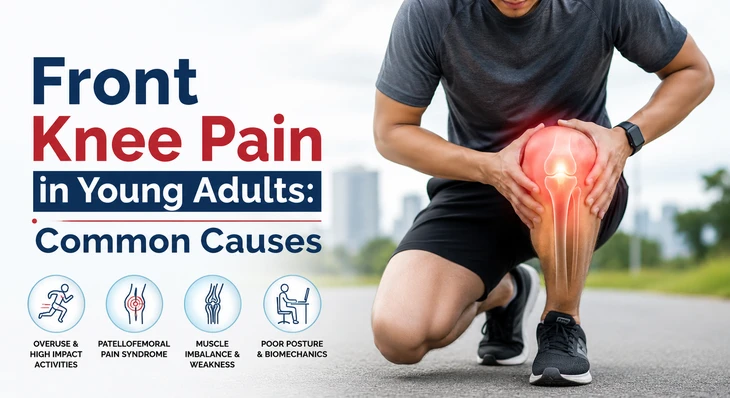
Quick Answer: What Causes Front Knee Pain in Young Adults?
The most common causes of pain in the front of the knee include:
- Patellofemoral pain syndrome (Runner's Knee)
- Chondromalacia patella
- Overuse from sports and exercise
- Muscle weakness or imbalance
- Poor movement mechanics
- Tendon irritation
- Cartilage wear beneath the kneecap
- Prolonged sitting with bent knees
Most cases of anterior knee pain in young adults are related to overuse, improper kneecap tracking, or weakness in the muscles that support the knee and hip.
Understanding the Front of the Knee
The front portion of the knee includes:
- The kneecap (patella)
- Patellar tendon
- Quadriceps tendon
- Cartilage under the kneecap
- Surrounding ligaments and soft tissues
The kneecap moves within a groove at the end of the thigh bone whenever you walk, run, squat, climb stairs, or jump. When this movement becomes abnormal or repetitive stress accumulates, pain often develops.
Common Symptoms
People experiencing front knee pain in young adults often report:
- Pain around the kneecap
- Pain behind the kneecap
- Aching discomfort during activity
- Clicking or grinding sensations
- Knee stiffness
- Pain after sitting for long periods
- Discomfort while climbing stairs
- Pain during squats or lunges
The location and timing of symptoms often provide clues about the underlying condition.
Patellofemoral Pain Syndrome: The Most Common Cause
Patellofemoral pain syndrome in young adults is among the leading causes of knee pain. This condition occurs when the kneecap does not move smoothly within its groove, leading to irritation of the surrounding structures.
Typical Symptoms
Runner's knee symptoms in young adults may include:
- Dull ache around the kneecap
- Front knee pain when climbing stairs
- Pain while running
- Pain after prolonged sitting
- Discomfort during squatting
- Knee weakness after activity
Many patients notice symptoms gradually rather than after a specific injury.
Risk Factors
Common contributors include:
- Weak hip muscles
- Tight quadriceps
- Tight hamstrings
- Flat feet
- Poor running mechanics
- Sudden increase in training volume
Because of its prevalence, patellofemoral pain syndrome should be considered whenever someone experiences front knee pain without injury.
Chondromalacia Patella and Cartilage Irritation
Chondromalacia patella in young adults refers to softening or irritation of the cartilage beneath the kneecap. The cartilage normally helps the kneecap glide smoothly. Repetitive stress or improper alignment may cause this cartilage to become irritated.
Common Signs
- Pain behind the kneecap causes discomfort during movement
- Grinding sensation during knee bending
- Knee stiffness after inactivity
- Pain when standing from a seated position
- Increased symptoms after exercise
Although often confused with runner's knee, chondromalacia involves cartilage changes that may require additional management strategies.
Why Front Knee Pain Often Appears During Exercise
Knee pain during exercise in young adults frequently develops when physical activity exceeds the body's current capacity. Common triggers include:
- Running longer distances
- Increasing workout intensity too quickly
- Excessive jumping
- Repeated squats
- Poor exercise technique
Front Knee Pain When Squatting
Front knee pain when squatting can occur because squats place significant forces on the kneecap. Potential reasons include:
- Poor squat form
- Weak glute muscles
- Limited ankle mobility
- Excessive knee inward movement
- Overtraining
Proper technique and gradual progression often help reduce symptoms.
Knee Pain While Running in Young Adults
Running places repetitive stress on the patellofemoral joint. Factors that contribute include:
- Inadequate recovery
- Weak hip stabilizers
- Poor footwear
- Sudden mileage increases
- Running downhill frequently
Correcting these factors can significantly improve symptoms.
Why Climbing Stairs Makes Knee Pain Worse
One of the classic symptoms of anterior knee pain in young adults is discomfort when climbing stairs. When walking upstairs, the kneecap experiences increased pressure against the thigh bone. This pressure becomes problematic when:
- The kneecap is not tracking properly
- Cartilage is irritated
- Muscles are weak
- Inflammation is present
Front Knee Pain When Climbing Stairs
People often describe:
- Sharp pain under the kneecap
- Aching around the kneecap
- Difficulty ascending stairs
- Temporary weakness during stair climbing
This symptom strongly suggests involvement of the patellofemoral joint.
The Connection Between Sitting and Knee Pain
Many people are surprised when knee pain after sitting for long periods develops despite little physical activity. This is sometimes called the "movie theater sign." When the knee remains bent for extended periods:
- Joint pressure increases
- Soft tissues stiffen
- Blood flow changes
- Irritated structures become more sensitive
Standing up may produce temporary pain that improves after a few minutes of walking.
Muscle Weakness and Movement Problems
The knee rarely functions alone. Weakness in nearby muscles can significantly affect kneecap movement.
Important Muscle Groups
Hip Muscles
Weak hips allow the thigh to rotate inward excessively, increasing stress on the kneecap.
Quadriceps
The quadriceps help stabilize the kneecap during movement. Weaknesses may contribute to poor tracking.
Gluteal Muscles
Strong glutes help maintain proper lower-body alignment. Weakness often contributes to recurrent knee pain. Addressing these muscle groups is often a key part of recovery.
Front Knee Pain Without Injury: Why It Happens
Many young adults experience front knee pain without injury and become concerned because they cannot identify a specific event. In reality, most cases result from gradual overload rather than trauma. Common causes include:
- Overtraining
- Poor biomechanics
- Muscle imbalances
- Repetitive movement patterns
- Prolonged sitting
- Inadequate recovery
The absence of injury does not mean the pain should be ignored.
Pain Around the Kneecap Causes
Pain around the kneecap can vary depending on activity level and individual anatomy. Frequent causes include:
- Patellofemoral pain syndrome
- Chondromalacia patella
- Patellar tendinitis
- Muscle imbalance
- Overuse injuries
- Poor movement patterns
A thorough assessment helps identify the specific contributing factors.
Pain Behind the Kneecap Causes
Pain behind the kneecap often involves:
- Cartilage irritation
- Patellofemoral joint stress
- Improper kneecap tracking
- Repetitive loading
Symptoms commonly worsen during:
- Stair climbing
- Running
- Squatting
- Prolonged sitting
How to Treat Front Knee Pain Naturally
Many cases improve with conservative management.
Reduce Aggravating Activities
Temporarily decrease activities that worsen symptoms. This may include:
- Running
- Jumping
- Deep squats
- High-impact sports
Apply Ice
Ice may help reduce discomfort after activity. Use for:
- 15–20 minutes
- Several times daily if needed
Improve Flexibility
Gentle stretching may help:
- Quadriceps
- Hamstrings
- Calves
- Hip flexors
Strengthen Supporting Muscles
Muscle strengthening is one of the most effective long-term solutions. Those wondering how to treat front knee pain naturally should focus on improving strength, flexibility, recovery, and movement quality.
Exercises for Anterior Knee Pain
Exercise should focus on restoring muscle balance and improving knee mechanics.
Straight Leg Raises
Benefits:
- Strengthens quadriceps
- Minimal knee stress
- Easy for beginners
Glute Bridges
Benefits:
- Strengthens glutes
- Improves hip stability
- Supports proper alignment
Clamshells
Benefits:
- Targets hip stabilizers
- Reduces inward knee collapse
Wall Sits
Benefits:
- Builds endurance
- Strengthens quadriceps
Step-Ups
Benefits:
- Improves functional strength
- Mimics daily activities
Before beginning exercises for anterior knee pain, symptoms should be assessed to ensure exercises are appropriate.
Common Mistakes That Delay Recovery
Several habits can prolong symptoms.
Ignoring Pain
Pushing through significant pain often worsens irritation.
Returning Too Quickly
Resuming full activity before healing increases the risk of recurrence.
Focusing Only on the Knee
Hip and ankle function often contributes to knee problems.
Skipping Strength Training
Rest alone rarely addresses the underlying cause.
Poor Footwear
Worn-out shoes may alter movement patterns and increase stress on the knee.
When to See a Doctor for Front Knee Pain
Although many cases improve with self-care, some situations require medical evaluation.
Seek Professional Assessment If:
- Pain persists longer than several weeks
- Symptoms worsen despite rest
- Knee swelling develops
- The knee gives way
- Locking occurs
- Walking becomes difficult
- Symptoms interfere with sports or work
Knowing when to see a doctor for front knee pain is important because persistent symptoms may indicate cartilage damage, structural issues, or other conditions requiring specialized treatment.
Preventing Future Knee Problems
Preventive strategies can reduce the likelihood of recurring pain.
Key Prevention Tips
- Warm up before exercise
- Increase training gradually
- Maintain a healthy body weight
- Strengthen hips and legs
- Stretch regularly
- Wear supportive footwear
- Prioritize recovery days
- Avoid sudden activity spikes
Consistency is more effective than occasional intense workouts.
Final Thoughts
Front knee pain in young adults is extremely common and is often linked to patellofemoral pain syndrome, muscle imbalances, overuse, or cartilage irritation beneath the kneecap. Symptoms such as front knee pain when climbing stairs, front knee pain when squatting, knee pain after sitting for long periods, and knee pain while running in young adults frequently point toward problems involving the kneecap and surrounding structures. The good news is that most cases respond well to activity modification, strengthening exercises, improved movement mechanics, and gradual return to activity. Identifying the underlying cause early can prevent chronic symptoms and help maintain an active lifestyle. If pain persists, worsens, or affects daily activities, a medical evaluation can provide a clear diagnosis and appropriate treatment plan.