
- What Is Runner's Knee?
- What Are the Early Signs of Runner's Knee?
- How to Know If You Have Runner's Knee
- Why Does Runner's Knee Develop Over Time?
- Runner's Knee Symptoms When Running
- Why Does My Knee Hurt After Running?
- Causes of Runner's Knee in Beginners
- The Stair Test: An Important Warning Sign
- Patellofemoral Pain Syndrome: Early Symptoms You Should Not Ignore
- Exercises to Prevent Runner's Knee Pain
- Runner's Knee Prevention Tips for Runners
- Runner's Knee Recovery and Treatment Options
- When to Seek Treatment for Runner's Knee
- Common Misconceptions About Runner's Knee
- Protect Your Knees Before Small Symptoms Become Big Problems
Runner's Knee: Early Warning Signs Every Runner Should Know Running is one of the most effective ways to improve cardiovascular fitness, build endurance, and maintain a healthy weight. However, repetitive stress on the knees can sometimes lead to one of the most common overuse injuries among runners: runner's knee. Understanding the early warning signs of runner's knee can help every runner prevent a minor irritation from becoming a long-term injury. Many runners ignore subtle symptoms until pain interferes with training, daily activities, or even simple movements like climbing stairs. The good news is that recognizing the earliest signs of trouble allows you to make adjustments before significant damage occurs. This guide explains what runner's knee is, how it develops, the symptoms to watch for, common causes, prevention strategies, and treatment options.
What Is Runner's Knee?
Runner's knee is a common term for patellofemoral pain syndrome (PFPS), a condition that causes pain around or behind the kneecap (patella). The condition occurs when the kneecap does not move smoothly within its groove during movement. Repetitive stress, muscle imbalances, training errors, and poor biomechanics can increase pressure on the joint and surrounding tissues.
Quick Definition
Patellofemoral pain syndrome is characterized by:
- Pain around the front of the knee
- Discomfort behind the kneecap
- Pain that worsens during running or knee-bending activities
- Gradual onset rather than sudden injury
For many runners, the first signs of patellofemoral pain syndrome are subtle and easy to overlook.
What Are the Early Signs of Runner's Knee?
The earliest symptoms often appear before significant pain develops.
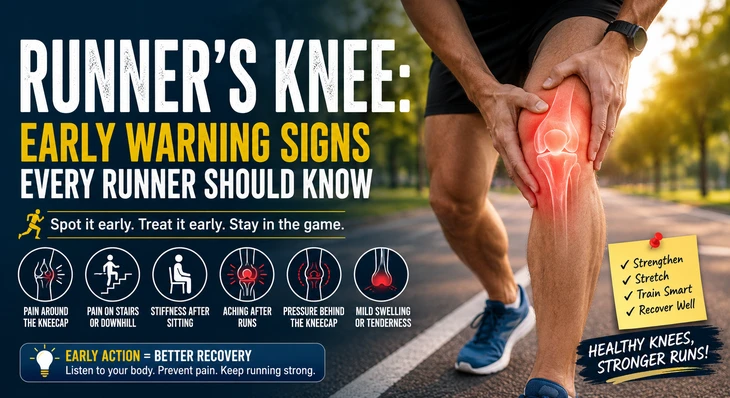
Common Early Warning Signs
If you notice any of the following symptoms regularly, it may indicate the beginning stages of runner's knee:
- Mild aching around the kneecap after running
- Knee discomfort during longer runs
- Pain when walking downhill
- Tenderness around the front of the knee
- Occasional stiffness after exercise
- Mild swelling around the knee joint
- A feeling of pressure behind the kneecap
These early signs of runner's knee often come and go initially, which is why many athletes continue training without addressing the underlying problem.
How to Know If You Have Runner's Knee
Many runners ask, "How do I know if I have runner's knee?" While a medical evaluation provides the most accurate diagnosis, several symptoms strongly suggest patellofemoral pain syndrome.
Key Indicators
You may have runner's knee if you experience:
- Pain around the kneecap during or after running
- Discomfort while squatting
- Pain after sitting for extended periods
- Knee pain when climbing stairs
- Pain that worsens with repetitive knee bending
- Clicking or grinding sensations during movement
Runner's knee pain around the kneecap is typically the most recognizable symptom. Unlike ligament injuries, runner's knee usually develops gradually rather than after a single traumatic event.
Why Does Runner's Knee Develop Over Time?
Many runners are surprised when knee pain appears despite months or years of successful training. The reason is simple: runner's knee develops over time due to repetitive stress.
The Progression Often Looks Like This
- Minor irritation of the knee structures
- Occasional discomfort after runs
- Pain during longer workouts
- Persistent symptoms during activity
- Pain during daily movements
Without intervention, mild runner's knee symptoms can progress to chronic pain that limits running performance.
Runner's Knee Symptoms When Running
Symptoms often become more noticeable during specific running situations.
Warning Signs During Training
Pay attention if you experience:
- Pain during the first few minutes of running
- Discomfort that worsens with distance
- Pain while running downhill
- Knee soreness after speed workouts
- Discomfort after trail runs
- Increased pain after back-to-back training days
These runner's knee symptoms when running often indicate excessive stress on the patellofemoral joint.
Pain Patterns Matter
Pain may:
- Improve after warming up
- Return after exercise
- Increase the following day
- Become more frequent over time
Recognizing these patterns early can prevent long-term issues.
Why Does My Knee Hurt After Running?
Many runners notice symptoms only after finishing their workout.
Common Reasons
If you're wondering, "Why does my knee hurt after running?", possible causes include:
- Overtraining
- Sudden mileage increases
- Weak hip muscles
- Poor running mechanics
- Tight quadriceps
- Tight iliotibial (IT) band
- Insufficient recovery
Pain after exercise is often one of the earliest warning signs of runner's knee pain. Ignoring post-run discomfort can allow inflammation and irritation to worsen.
Causes of Runner's Knee in Beginners
New runners are particularly vulnerable because their bodies are adapting to new training demands.
Common Beginner Mistakes
The most frequent causes of runner's knee in beginners include:
Increasing Mileage Too Quickly
The knee joint needs time to adapt to repetitive loading.
Running With Weak Hips
Weak glute muscles can affect knee alignment during movement.
Poor Running Form
Biomechanical inefficiencies may increase stress on the kneecap.
Inadequate Recovery
Training hard without sufficient rest prevents tissue repair.
Worn-Out Footwear
Old shoes may no longer provide adequate support and shock absorption. These are also among the most common mistakes that lead to runner's knee among experienced runners.
The Stair Test: An Important Warning Sign
One of the earliest and most reliable indicators of runner's knee involves stairs.
Runner's Knee Pain When Climbing Stairs
Many runners experience:
- Pain when going downstairs
- Discomfort when climbing stairs
- Pressure behind the kneecap
- Increased symptoms after repeated stair use
Why does this happen? Stair climbing increases compression forces between the kneecap and the femur, making underlying irritation more noticeable. Because of this, runner's knee pain when climbing stairs is often considered a hallmark symptom of patellofemoral pain syndrome.
Patellofemoral Pain Syndrome: Early Symptoms You Should Not Ignore
The earliest symptoms are often mild but highly predictive.
Red Flags to Watch For
- Pain after long periods of sitting
- Knee stiffness after inactivity
- Clicking sensations without injury
- Mild swelling around the kneecap
- Pain after increasing training volume
- Recurring discomfort in the same location
Patellofemoral pain syndrome's early symptoms rarely disappear permanently without addressing the underlying cause. The sooner you respond, the easier recovery typically becomes.
Exercises to Prevent Runner's Knee Pain
Prevention is far easier than rehabilitation.
Strengthening Exercises
The following exercises can improve knee stability:
Glute Bridges
Strengthen the gluteal muscles and improve hip control.
Clamshells
Target hip stabilizers that influence knee alignment.
Step-Ups
Build strength and control throughout the lower body.
Single-Leg Squats
Improve balance and movement, mechanics.
Side Leg Raises
Enhance hip strength and reduce knee stress.
Mobility Exercises
Include:
- Quadriceps stretches
- Hamstring stretches
- Hip flexor stretches
- Calf stretches
- Foam rolling
These exercises to prevent runner's knee pain can significantly reduce the risk of injury when performed consistently.
Runner's Knee Prevention Tips for Runners
A few simple habits can dramatically reduce the likelihood of developing knee pain.
Practical Prevention Strategies
Follow the 10% Rule
Avoid increasing weekly mileage by more than approximately 10%.
Strength Train Regularly
Focus on:
- Glutes
- Hips
- Core
- Hamstrings
Replace Running Shoes
Most running shoes lose effectiveness after several hundred miles.
Warm Up Properly
Prepare muscles and joints before intense training.
Prioritize Recovery
Recovery is where adaptation occurs.
Additional Prevention Tips
- Avoid sudden training spikes
- Varying running surfaces
- Improve running mechanics
- Cross-train occasionally
- Address minor symptoms immediately
These runner's knee prevention tips for runners can significantly reduce injury risk over the long term.
Runner's Knee Recovery and Treatment Options
Early treatment usually leads to faster recovery.
Initial Treatment Approaches
Reduce Aggravating Activities
Temporary training modifications may be necessary.
Ice the Area
Ice can help reduce discomfort after activity.
Improve Muscle Strength
Target weak areas identified during assessment.
Stretch Tight Muscles
Address mobility restrictions contributing to knee stress.
Correct Training Errors
Review mileage progression, recovery habits, and footwear.
Physical Therapy
Many runners benefit from professional guidance to:
- Improve movement patterns
- Strengthen weak muscle groups
- Correct biomechanical issues
- Develop a safe return-to-running plan
These runner's knee recovery and treatment options are most effective when started early.
When to Seek Treatment for Runner's Knee
Not all knee pain requires immediate medical attention, but certain symptoms should not be ignored.
Seek Professional Evaluation If You Experience
- Persistent pain lasting several weeks
- Significant swelling
- Knee instability
- Pain that interferes with walking
- Symptoms worsening despite rest
- Recurrent pain after returning to running
Understanding when to seek treatment for runner's knee can prevent a minor issue from becoming a chronic condition.
Immediate Medical Attention May Be Needed For
- Severe swelling
- Inability to bear weight
- Locking of the knee
- Significant trauma or injury
These symptoms may indicate a condition other than runner's knee.
Common Misconceptions About Runner's Knee
Many runners delay treatment because of misinformation.
Myth 1: Pain Means You Should Stop Running Forever
Most runners return successfully after proper rehabilitation.
Myth 2: Only Beginners Get Runner's Knee
Experienced runners can develop the condition as well.
Myth 3: Rest Alone Fixes Everything
Addressing strength, mobility, and biomechanics is usually necessary.
Myth 4: Knee Pain Is a Normal Part of Running
Persistent pain should never be considered normal. Recognizing warning signs early and responding appropriately is the key to staying healthy and active.
Protect Your Knees Before Small Symptoms Become Big Problems
Runner's knee rarely appears overnight. The condition typically begins with subtle aches, mild stiffness, or occasional discomfort that gradually becomes more persistent. Understanding runner's knee early warning signs every runner should know allows you to identify problems before they disrupt training or daily life. Pay attention to knee pain after running, warning signs such as discomfort around the kneecap, pain when climbing stairs, stiffness after sitting, and recurring soreness during workouts. These symptoms often represent the first signs of patellofemoral pain syndrome rather than temporary fatigue. The best approach combines smart training, gradual progression, strength work, mobility exercises, and early intervention when symptoms arise. By recognizing the warning signs of runner's knee pain and taking action early, runners can often avoid prolonged setbacks and continue enjoying the sport safely for years to come.