
- Why Does Knee Pain Happen After Sitting for a Long Time?
- The Connection Between Sitting and Knee Joint Mechanics
- What Is Moviegoer's Knee?
- Patellofemoral Pain Syndrome After Sitting
- Other Possible Causes of Knee Pain After Sitting
- Why Does Knee Pain Improve After Walking?
- Risk Factors That Increase Your Chances of Developing Symptoms
- Knee Pain After Driving for Long Hours
- Knee Pain After Sitting at a Desk All Day
- How to Relieve Knee Pain After Sitting
- Exercises for Knee Stiffness After Sitting
- Common Mistakes That Can Make Symptoms Worse
- When Should You Be Concerned About Knee Pain?
- Can Knee Pain After Sitting Be Prevented?
- Key Takeaways
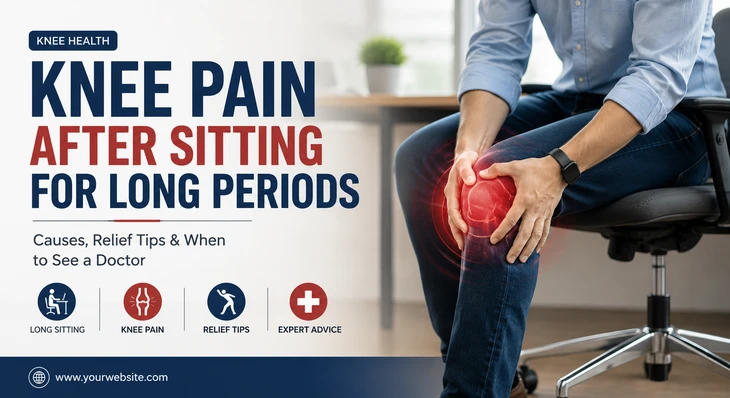
Many people notice knee pain after sitting for long periods, especially when standing up after working at a desk, driving, watching a movie, or traveling. The discomfort can range from mild stiffness to sharp pain around the kneecap. In many cases, the pain eases after a few minutes of walking, but the recurring pattern often raises concerns. If you've ever wondered, "Why does my knee hurt after sitting for a long time?", you're not alone. This symptom is surprisingly common and often linked to the knee joint's response to prolonged inactivity and sustained bending. Understanding the cause can help you find relief, prevent worsening symptoms, and determine whether professional treatment is needed.
Why Does Knee Pain Happen After Sitting for a Long Time?
When you remain seated for an extended period, your knees stay bent. This can increase pressure behind the kneecap and temporarily reduce joint lubrication. As a result, you may experience:
- Knee stiffness after sitting for long periods
- Aching around the kneecap
- Difficulty straightening the knee
- Pain when standing up after sitting
- Temporary weakness or discomfort
In many cases, movement restores circulation and joint fluid distribution, causing symptoms to improve after walking.
Quick Answer
If you have knee pain that improves after walking, the most common causes include:
- Patellofemoral Pain Syndrome
- Early osteoarthritis
- Tight muscles around the knee and hip
- Joint inflammation
- Prolonged sitting with bent knees
The Connection Between Sitting and Knee Joint Mechanics
The knee joint relies on movement to maintain healthy cartilage and fluid circulation. During long periods of sitting:
- The kneecap remains pressed against the thigh bone.
- Synovial fluid circulation decreases.
- Muscles around the knee become less active.
- Soft tissues may tighten temporarily.
- Joint stiffness develops.
This explains why some people experience knee pain after sitting with bent knees but feel better after moving around.
What Is Moviegoer's Knee?
One of the most common explanations for front knee pain after sitting too long is a condition known as "Moviegoer's Knee."
Moviegoer's Knee Symptoms
Moviegoer's knee refers to pain that develops after sitting with the knees bent for extended periods. Common symptoms include:
- Pain behind the kneecap after sitting
- Aching during movies, flights, or meetings
- Knee pain when getting up from a chair
- Stiffness after prolonged sitting
- Clicking or grinding sensations
The medical condition most often associated with moviegoers' knee is Patellofemoral Pain Syndrome (PFPS).
Patellofemoral Pain Syndrome After Sitting
Patellofemoral Pain Syndrome occurs when the kneecap does not move smoothly within its groove during knee movement. The condition frequently causes:
- Kneecap pain after sitting for extended periods
- Front knee pain while climbing stairs
- Discomfort during squats
- Pain after inactivity
- Tenderness around the kneecap
Why Sitting Makes PFPS Worse
When the knee remains bent for a long time:
- Pressure behind the kneecap increases
- Cartilage becomes irritated
- Joint structures become compressed
This can trigger pain the moment you stand up.
Other Possible Causes of Knee Pain After Sitting
Although patellofemoral pain is common, several other conditions may contribute.
Early Osteoarthritis
Osteoarthritis can cause:
- Knee stiffness after sitting for long periods
- Morning stiffness
- Aching during activity
- Mild swelling
The cartilage becomes less smooth, making movement uncomfortable after inactivity.
Tight Muscles and Soft Tissues
Tight muscles around the hips and legs can alter knee alignment. Problem areas include:
- Quadriceps
- Hamstrings
- Hip flexors
- Calves
- Gluteal muscles
Muscle tightness often contributes to knee discomfort after inactivity.
Tendon Irritation
Repeated stress on knee tendons may lead to:
- Localized pain
- Tenderness
- Stiffness after rest
Pain is often worse when transitioning from sitting to standing.
Meniscus Irritation
The meniscus acts as a shock absorber inside the knee. Symptoms may include:
- Pain after prolonged sitting
- Catching sensations
- Clicking
- Locking episodes
Why Does Knee Pain Improve After Walking?
Many people notice that their pain decreases after several minutes of movement. This happens because walking:
- Increases blood circulation
- Improves joint lubrication
- Activates supporting muscles
- Reduces temporary stiffness
- Restores normal knee motion
This pattern of knee pain that improves after walking is common in both patellofemoral pain syndrome and early arthritis.
Risk Factors That Increase Your Chances of Developing Symptoms
Several factors can increase the likelihood of knee pain after sitting.
Lifestyle Factors
- Desk jobs
- Long commutes
- Frequent driving
- Sedentary habits
- Limited exercise
Physical Factors
- Weak quadriceps
- Poor posture
- Tight hips
- Flat feet
- Excess body weight
Age-Related Changes
As people age, cartilage and joint tissues may become less resilient, leading to increased stiffness after inactivity.
Knee Pain After Driving for Long Hours
Long-distance driving places the knee in a fixed position for extended periods. This can cause:
- Knee pain after driving for long hours
- Stiffness while exiting the vehicle
- Difficulty fully extending the knee
- Discomfort around the kneecap
Tips for Drivers
- Take breaks every 1–2 hours
- Stretch your legs during stops
- Adjust seat position properly
- Keep knees slightly relaxed
- Perform ankle pumps while seated
Knee Pain After Sitting at a Desk All Day
Office workers commonly experience knee pain after sitting at a desk all day. Several workplace habits contribute:
- Sitting continuously without breaks
- Poor chair height
- Crossed legs
- Limited movement
- Weak lower-body muscles
Workplace Prevention Strategies
- Stand every 30–60 minutes
- Use a sit-stand desk if possible
- Stretch regularly
- Walk during phone calls
- Strengthen supporting muscles
Small movement breaks throughout the day often make a significant difference.
How to Relieve Knee Pain After Sitting
If symptoms are mild, several simple strategies may help.
Move Before Standing
Before standing up:
- Straighten the knee several times.
- Flex and extend the ankle.
- Gently tighten thigh muscles.
- Rise slowly.
This helps prepare the joint for movement.
Apply Heat for Stiffness
Heat may improve:
- Joint flexibility
- Blood flow
- Muscle relaxation
Warm compresses can be helpful before an activity.
Use Ice for Inflammation
If swelling is present:
- Apply ice for 15–20 minutes
- Use a towel barrier
- Avoid excessive icing
Maintain Healthy Body Weight
Extra weight increases pressure on the knee joint during daily activities.
Exercises for Knee Stiffness After Sitting
Targeted exercises can improve knee function and reduce recurring discomfort.
Straight Leg Raises
This exercise strengthens the quadriceps without excessive stress on the knees. How to perform:
- Lie on your back.
- Keep one leg straight.
- Raise it slowly.
- Hold briefly.
- Lower with control.
Repeat 10–15 times.
Seated Knee Extensions
- Sit upright.
- Slowly straighten one knee.
- Hold for several seconds.
- Return to the starting position.
This helps maintain mobility during long workdays.
Hamstring Stretch
Flexible hamstrings reduce stress on the knee joint. Hold each stretch for 20–30 seconds.
Hip Strengthening Exercises
Strong hips improve kneecap tracking and reduce knee strain. Examples include:
- Clamshells
- Side leg raises
- Glute bridges
- Resistance band walks
Gentle Walking
Walking remains one of the simplest ways to reduce stiffness and improve joint function.
Common Mistakes That Can Make Symptoms Worse
Many people unknowingly aggravate their knee pain. Avoid:
- Sitting for several hours without breaks
- Ignoring persistent pain
- Poor sitting posture
- Sudden increases in exercise intensity
- Skipping strengthening exercises
Consistency is often more effective than occasional intense workouts.
When Should You Be Concerned About Knee Pain?
Occasional stiffness is common, but some symptoms warrant medical attention.
When to See a Doctor for Knee Pain After Sitting
Seek evaluation if you experience:
- Persistent pain lasting several weeks
- Significant swelling
- Knee locking
- Instability or giving way
- Difficulty walking
- Severe pain
- Redness or warmth
- Recent injury
A healthcare professional may recommend imaging studies or physical therapy depending on the cause.
Can Knee Pain After Sitting Be Prevented?
In many cases, yes. The best prevention strategies include:
- Staying physically active
- Taking regular movement breaks
- Strengthening the hips and thighs
- Maintaining healthy body weight
- Improving workplace ergonomics
- Stretching regularly
Even standing and walking for a few minutes every hour can help prevent stiffness and discomfort.
Key Takeaways
Knee pain after sitting for long periodsis often caused by pressure on the kneecap, joint stiffness, muscle tightness, or conditions such as patellofemoral pain syndrome after sitting. Symptoms commonly include knee pain when standing up after sitting, stiffness, and discomfort around or behind the kneecap. Fortunately, most cases improve with movement, strengthening exercises, stretching, and better sitting habits. If symptoms persist, worsen, or interfere with daily activities, a medical evaluation can help identify the underlying cause and guide appropriate treatment. By understanding why the pain occurs and addressing contributing factors early, many people can reduce discomfort and maintain healthy, pain-free knee function.