
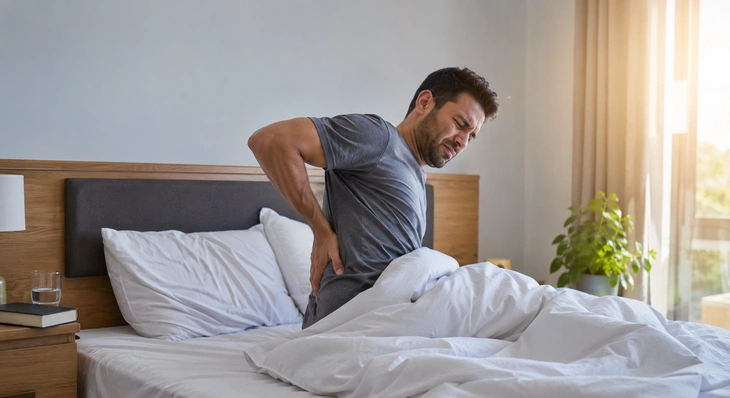
- Waking Up With Lower Back Pain After Sleeping on One Side? Here's What May Be Happening
- Why Does Lower Back Pain Feel Worse After Sleeping on One Side?
- Can Side Sleeping Cause Lower Back Pain?
- How Does Sleeping on One Side Affect Spinal Alignment?
- Common Reasons Lower Back Pain Gets Worse After Sleeping
- Why Does Back Pain Improve After Moving Around?
- Can a Mattress Make Lower Back Pain Worse?
- How Can You Sleep on Your Side Without Hurting Your Back?
- Best Sleeping Position for Lower Back Pain
- Simple Morning Habits That May Help
- When Should Morning Lower Back Pain Be a Concern?
- Final Thoughts
Waking Up With Lower Back Pain After Sleeping on One Side? Here's What May Be Happening
You settle into bed after a long day, sleep through the night, and expect to wake up feeling refreshed. Instead, the first thing you notice in the morning is an aching lower back. For many people, the discomfort seems even worse when they spend most of the night sleeping on one side. If this sounds familiar, you're not alone. Morning lower back pain is one of the most common complaints among adults. While side sleeping is often recommended as a healthy sleep position, it can sometimes place uneven stress on the lower back, hips, and surrounding muscles. The result may be stiffness, soreness, or pain that feels most noticeable when getting out of bed. The good news is that side sleeping itself is not always the problem. In many cases, the pain is related to spinal alignment, mattress support, muscle tension, or underlying conditions that become more noticeable after hours of remaining in the same position.
Why Does Lower Back Pain Feel Worse After Sleeping on One Side?
When you sleep on one side for several hours, your body remains in a relatively fixed position. If your spine, hips, and pelvis are not properly aligned, certain muscles and joints may stay under stress throughout the night. Unlike daytime activities where you frequently change positions, sleep limits movement. Small alignment issues that might not bother you during the day can become more noticeable after six to eight hours of continuous pressure. As a result, you may wake up with:
- Lower back stiffness
- Pain on one side of the lower back
- Tightness around the hips
- Difficulty standing upright immediately after waking
- Discomfort that improves after walking around
Many people notice that the pain gradually decreases once they start moving because the muscles warm up and the joints begin functioning normally again.
Can Side Sleeping Cause Lower Back Pain?
Side sleeping does not automatically cause lower back pain. In fact, many healthcare professionals recommend it because it can reduce pressure on the spine compared with stomach sleeping. However, problems can develop when side sleeping is combined with poor posture or inadequate support. For example:
- The upper leg may pull the pelvis forward.
- The spine may curve unnaturally.
- The mattress may allow the hips to sink too deeply.
- The shoulders and hips may not remain aligned.
Over time, these factors can create tension in the lumbar spine, leading to discomfort that feels worse in the morning.
How Does Sleeping on One Side Affect Spinal Alignment?
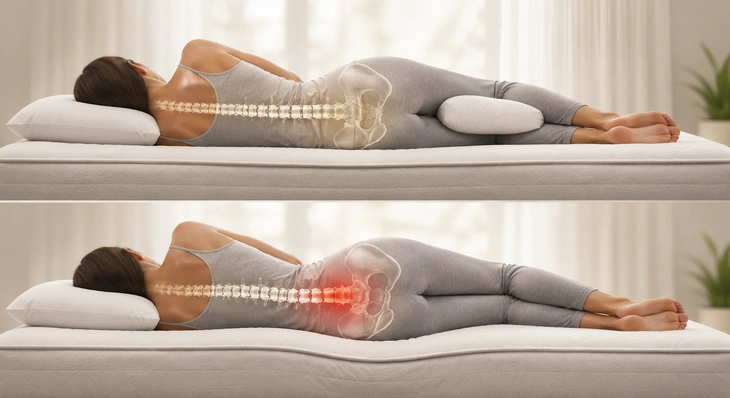
The spine is designed to maintain natural curves. During sleep, these curves should remain supported rather than exaggerated. When sleeping on one side, the hips carry a significant portion of body weight. If the mattress is too soft, the hips may sink lower than the shoulders. This creates a sideways bend in the spine. On the other hand, if the mattress is too firm, pressure points may develop around the shoulders and hips, forcing the spine into an awkward position. Even slight misalignment repeated night after night can contribute to:
- Muscle strain
- Joint irritation
- Morning stiffness
- One-sided lower back pain
Maintaining proper spinal alignment during sleep is one of the most important factors in preventing morning back discomfort.
Common Reasons Lower Back Pain Gets Worse After Sleeping
Poor Mattress Support
Your mattress plays a major role in spinal health. An old or unsupportive mattress may fail to keep the body in a neutral position. If the hips sink excessively or the lower back lacks support, stress can build up overnight. Signs that your mattress may be contributing to pain include:
- Pain that improves when sleeping elsewhere
- Visible mattress sagging
- Waking up feeling stiff every morning
- Increased discomfort after long periods in bed
Muscle Tightness and Imbalances
Tight hip muscles can pull on the pelvis and affect spinal alignment. People who sit for long hours often develop tight hip flexors and weakened core muscles. These imbalances may not seem significant during the day but can become more noticeable after remaining still overnight. The lower back often compensates for these imbalances, leading to pain and stiffness in the morning.
Pelvic Misalignment
The pelvis acts as the foundation for the spine. If the pelvis tilts unevenly while sleeping, the muscles surrounding the lower back may work harder to stabilize the body. This prolonged strain can result in discomfort upon waking. Pelvic alignment issues are particularly common among side sleepers who do not use adequate support between the knees.
Sacroiliac Joint Irritation
The sacroiliac joints connect the spine to the pelvis. These joints can become irritated when uneven pressure is placed on one side of the body during sleep. Pain from the sacroiliac joint often feels like lower back pain but may also spread into the buttocks or upper thigh. People sometimes mistake this discomfort for muscle strain because the symptoms can be very similar.
Sciatica and Nerve Compression
If a nerve becomes compressed or irritated, symptoms may become more noticeable after sleeping. Sciatica can cause:
- Pain in the lower back
- Discomfort in the buttock
- Tingling in the leg
- Numbness or weakness
Certain sleeping positions may aggravate nerve irritation, especially if spinal alignment is compromised.
Degenerative Changes in the Spine
As people age, the spinal discs naturally lose some of their flexibility and hydration. These changes may increase sensitivity to prolonged positions during sleep. Morning stiffness is often more common in older adults because spinal structures require more time to loosen after periods of inactivity.
Inflammatory Conditions
Certain inflammatory conditions can cause back pain that feels worse after rest. Unlike mechanical back pain, inflammatory pain often improves with movement and becomes more noticeable during periods of inactivity, including sleep. Persistent morning stiffness lasting longer than thirty minutes should be evaluated by a healthcare professional.
Why Does Back Pain Improve After Moving Around?
Many people report that their lower back feels significantly better after walking for a few minutes. This happens because movement:
- Increases blood flow
- Reduces muscle stiffness
- Improves joint lubrication
- Restores normal mobility
When the body remains still for extended periods, muscles and connective tissues can temporarily tighten. Gentle movement helps reverse this process. This is why morning stretches and short walks often provide relief.
Can a Mattress Make Lower Back Pain Worse?
Yes, absolutely. A mattress that fails to support the spine properly can contribute to chronic morning back pain. While there is no single mattress type that works for everyone, most side sleepers benefit from a surface that provides both support and pressure relief. A suitable mattress should:
- Support the natural curve of the spine
- Prevent excessive hip sinking
- Reduce pressure on shoulders and hips
- Allow comfortable movement during sleep
Replacing an old mattress can sometimes lead to noticeable improvements in sleep quality and back comfort.
How Can You Sleep on Your Side Without Hurting Your Back?
Small adjustments can make a significant difference.
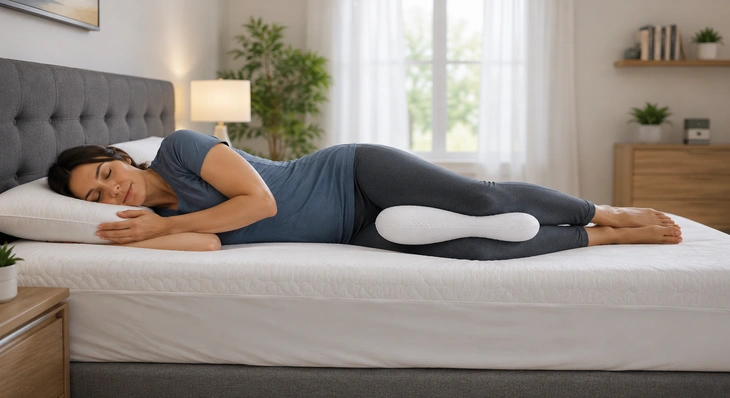
Place a Pillow Between Your Knees
This simple technique helps maintain alignment between the hips, pelvis, and spine. Without knee support, the top leg may rotate forward and place stress on the lower back.
Keep the Spine Neutral
Avoid curling excessively into a tight fetal position.
A gentle bend in the knees is usually more comfortable while helping maintain healthy spinal alignment.
Choose the Right Pillow
Your neck should remain aligned with the rest of your spine. A pillow that is too high or too flat may indirectly affect posture throughout the entire back.
Change Positions Occasionally
Remaining in one position all night may increase pressure on certain joints and muscles. Changing positions naturally during sleep can help distribute pressure more evenly.
Best Sleeping Position for Lower Back Pain
There is no universal best sleeping position for everyone, but several options may help reduce discomfort. For many people with lower back pain:
- Side sleeping with a pillow between the knees works well.
- Sleeping on the back with a pillow under the knees can reduce spinal stress.
- Stomach sleeping is generally less favorable because it often increases strain on the lower back and neck.
The ideal position is one that keeps the spine in a neutral, supported posture throughout the night.
Simple Morning Habits That May Help
If morning back pain is becoming a routine problem, consider these strategies:
- Stretch gently before getting out of bed.
- Take a short walk after waking.
- Improve core strength through regular exercise.
- Avoid prolonged sitting during the day.
- Maintain a healthy body weight.
- Review your mattress and pillow setup.
Consistency is important. Small improvements in daily habits often lead to noticeable reductions in morning discomfort over time.

When Should Morning Lower Back Pain Be a Concern?
Occasional stiffness after sleeping is common and usually not serious. However, professional evaluation may be necessary if you experience:
- Pain lasting several weeks
- Pain that continues to worsen
- Numbness or tingling in the legs
- Weakness in the lower limbs
- Difficulty walking
- Loss of bladder or bowel control
- Severe pain that interferes with daily activities
Early assessment can help identify underlying causes and prevent symptoms from becoming chronic.
Final Thoughts
Lower back pain that feels worse after sleeping on one side is often linked to spinal alignment, mattress support, muscle tension, or prolonged pressure on specific joints. While side sleeping is generally considered a healthy sleep position, even minor posture issues can become magnified after several hours of uninterrupted sleep. If your pain improves after moving around, the problem may be related to stiffness and mechanical stress rather than a serious condition. Paying attention to sleep posture, mattress quality, and overall spinal support can often make a meaningful difference. For persistent symptoms, consulting a physiotherapist can help identify the underlying cause and provide targeted strategies to improve both sleep comfort and long-term spinal health.